
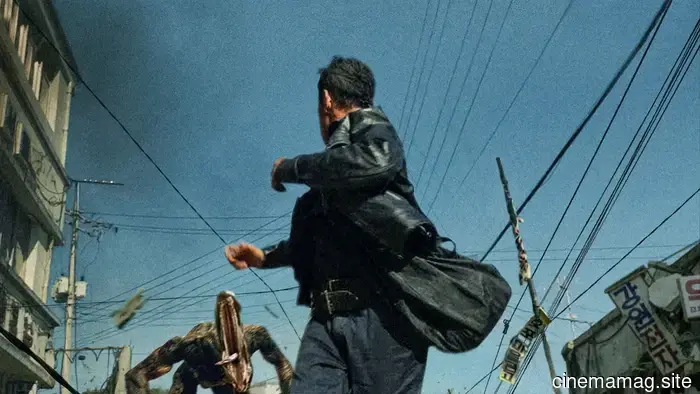
Director Na Hong-jin Discusses What Aliens Expose About Humanity and How to Capture a Timeless Sense of Action
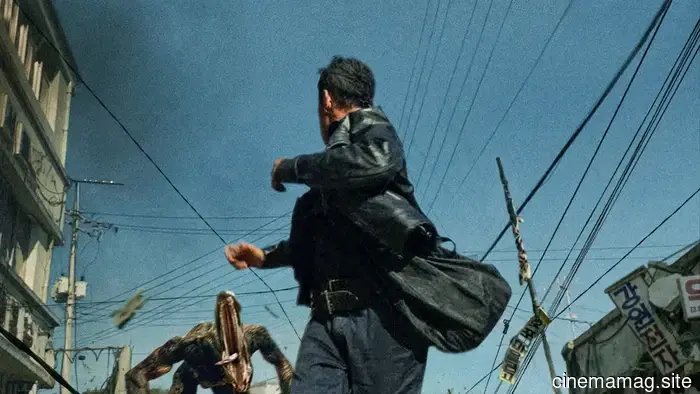
Something is threatening the livestock in Hope Harbor, a rural fishing community near the North and South Korea border. Local sheriff Bum-seok (Hwang Jung-min) discovers a powerful force capable of demolishing entire buildings during his investigation. Nearby mountain hunters find what appears to be a spaceship.
Director Na Hong-jin's Hope transitions from a local enigma to a global nightmare as villagers struggle to fend off the intruders. The screenplay, co-written by Na, Kim Sae-mi, and Kim Sae-rom, blends slapstick humor with intense action, resulting in a fast-paced three-hour film.
Hope debuted at Cannes this spring, with a “final cut” that is four minutes shorter screened at the New York Asian Film Festival. It is set to hit theaters on September 9. Prior to the festival, Na participated in an interview at NEON's Manhattan offices.
The Film Stage: How did you create these characters?
Na Hong-jin: I believed it was crucial to differentiate between the human and alien characters. The villagers dwell in a small community where everyone is familiar with one another, creating a close-knit, familial atmosphere. The aliens that crash-land on Earth are in a desperate state. I can't divulge too much about their backstory or future, but within this narrative, they are significantly disadvantaged compared to the humans, who unite to confront them.
This is a story about humans interacting with vulnerable alien beings. It explores how the humans come to recognize their behavior and alter their views when they realize the aliens originate from outside Earth and possess a civilization far more advanced than ours.
You portray humans with various flaws. How do these flaws contribute to your storytelling?
This film carries a negative view of humanity. Once they encounter the aliens, the villagers continuously remark on their filth and odor, expressing a desire to eliminate them. Yet, I explicitly showcase that humans can be even more repulsive in terms of smell and cleanliness. I find it intriguing that viewers might say, “Okay, the aliens are disgusting,” but when it comes to humans being dirty, they tend to laugh and make jokes.
That's valid, but I was considering how you illustrate Bum-seok, the police chief, as an arrogant individual who fails to grasp the situation. While he may be a source of humor, he also fulfills his responsibilities courageously. His flaws draw us into the story.
I designed Bum-seok to align with the audience's perspective. No one is ahead or behind him; we are in sync with him, experiencing the events in real time, particularly in the first 50 minutes, where I aimed for his view of the world to match ours.
The scale of this film is impressive. Your characters can drive through the village of Hope for extensive distances, surrounded by significant destruction.
When scouting locations, we sought out the most isolated, sparsely populated village that conveyed a sense of decay. We engaged with the residents, obtained their approval, and adorned nearly the entire village. Their cooperation allowed us to dress the sets without disrupting their everyday activities, with restaurants and shops remaining open. Their willingness to accommodate our needs contributed to the film's expansive depiction of devastation.
Did they allow you to damage their village?
We utilized walls that could be raised or lowered, creating the appearance of destruction or intact structures.
A considerable portion of the film unfolds in a remote mountain forest. It's uncommon to witness a film that truly captures the essence of being in the mountains.
For that segment, we employed very wide Arri DNA lenses. Traditional wide lenses often distort when you get closer, exaggerating distances in long shots. The DNA lens minimized distortion, allowing for long shots without exaggerating distances—perhaps that's why it felt like we effectively captured the forest's essence.
It was an ideal forest for filming, located within a Romanian national park. It was pristine, with minimal human presence and high populations of bears, wolves, and other wildlife. We were fortunate that the government approved our project; it was truly a perfect location.
Shooting there presented challenges. Controlling lighting was difficult, and roads were limited. You had to work with what nature provided rather than enforcing your own vision.
Since it was a national park, there were some roads available for equipment transport, which helped. However, the journey was quite complicated, taking around eleven hours by car from Bucharest, followed by an hour hike up into the mountains on foot.
The Romanian government permitted us to use a substantial area of the park, giving us access to numerous forest locations. This freedom allowed us to experiment during our two-month shoot. I acknowledge it was challenging but rewarding.
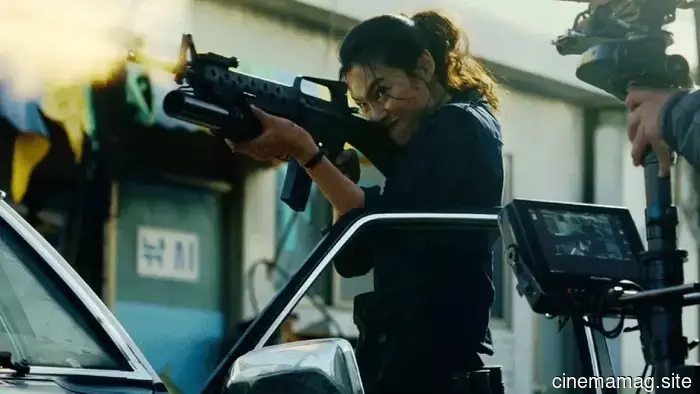
Your action scenes are impressive, partly due to the comedic elements integrated with the stunts.
The action films I enjoy have always contained a comedic aspect, though that trend seems to be fading. One of my goals was to revive classic action in a modern context. I strived to avoid green screens and instead filmed on location where the action occurred. The difficulty lay in integrating

Other articles
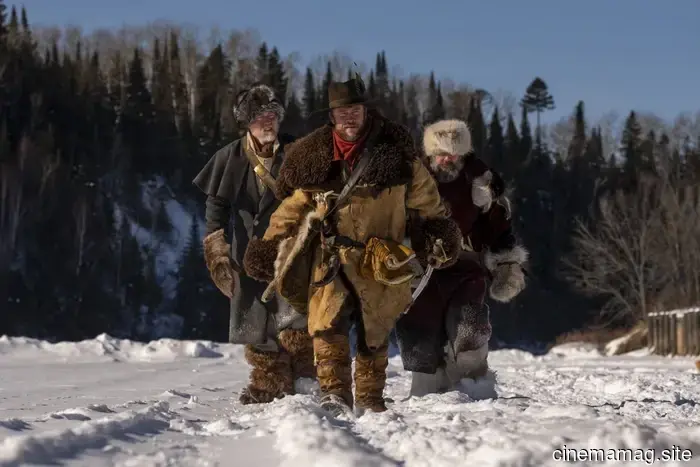 Hammer Films is back with a trailer for the survival horror film Ithaqua.
After its world premiere at FrightFest London over the weekend, Hammer Films has released the first trailer for the upcoming supernatural survival horror film Ithaqua. Taking place in 19th century Canada, the movie...
Hammer Films is back with a trailer for the survival horror film Ithaqua.
After its world premiere at FrightFest London over the weekend, Hammer Films has released the first trailer for the upcoming supernatural survival horror film Ithaqua. Taking place in 19th century Canada, the movie...
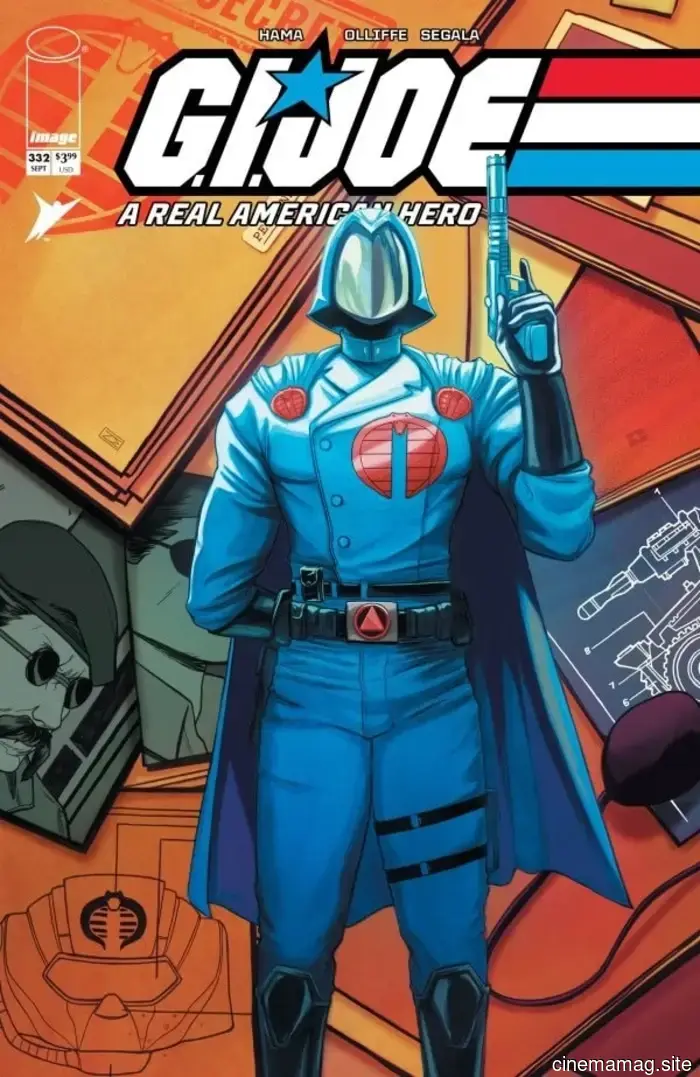 Comic Book Sneak Peek – G.I. Joe: A Real American Hero #332
Next week, Skybound and Image Comics will launch Larry Hama’s G.I. Joe: A Real American Hero #332, and you can catch an early glimpse with the official preview below… BATTLE TO THE DE…
Comic Book Sneak Peek – G.I. Joe: A Real American Hero #332
Next week, Skybound and Image Comics will launch Larry Hama’s G.I. Joe: A Real American Hero #332, and you can catch an early glimpse with the official preview below… BATTLE TO THE DE…
 The trailer for Final Fantasy VII Revelation reveals that the release date is set for April 2027.
The highly anticipated finale of Square Enix's Final Fantasy VII remake finally has a release date. A new trailer for Final Fantasy VII Revelation has revealed that the game will…
The trailer for Final Fantasy VII Revelation reveals that the release date is set for April 2027.
The highly anticipated finale of Square Enix's Final Fantasy VII remake finally has a release date. A new trailer for Final Fantasy VII Revelation has revealed that the game will…
 King Hiss is added to Mattel’s Masters of the Universe Chronicles collection with a new figure.
Mattel Creations has officially introduced the newest addition to its Masters of the Universe Chronicles collection, featuring an action figure of the nefarious leader of the evil Snake Men, King Hiss. The figure…
King Hiss is added to Mattel’s Masters of the Universe Chronicles collection with a new figure.
Mattel Creations has officially introduced the newest addition to its Masters of the Universe Chronicles collection, featuring an action figure of the nefarious leader of the evil Snake Men, King Hiss. The figure…
 Director Na Hong-jin Discusses What Aliens Uncover About Humanity and the Essence of Classic Action Cinematics
Something is harming the livestock in Hope Harbor, a rural fishing community close to the North and South Korean border. As local sheriff Bum-seok (Hwang Jung-min) looks into the situation, he discovers a powerful entity capable of tearing through entire structures. Hunters in the adjacent mountains come across what appears to be a spaceship. Director Na Hong-jin's film "Hope" develops from
Director Na Hong-jin Discusses What Aliens Uncover About Humanity and the Essence of Classic Action Cinematics
Something is harming the livestock in Hope Harbor, a rural fishing community close to the North and South Korean border. As local sheriff Bum-seok (Hwang Jung-min) looks into the situation, he discovers a powerful entity capable of tearing through entire structures. Hunters in the adjacent mountains come across what appears to be a spaceship. Director Na Hong-jin's film "Hope" develops from
 Comic Book Sneak Peek – G.I. Joe: A Real American Hero #332
Next week, Skybound and Image Comics will launch Larry Hama’s G.I. Joe: A Real American Hero #332, and you can take an early look with the official preview provided below... BATTLE TO THE DE…
Comic Book Sneak Peek – G.I. Joe: A Real American Hero #332
Next week, Skybound and Image Comics will launch Larry Hama’s G.I. Joe: A Real American Hero #332, and you can take an early look with the official preview provided below... BATTLE TO THE DE…
Director Na Hong-jin Discusses What Aliens Expose About Humanity and How to Capture a Timeless Sense of Action
Something is decimating the livestock in Hope Harbor, a remote fishing village located near the North and South Korea border. Upon investigating, local sheriff Bum-seok (Hwang Jung-min) discovers a powerful force capable of demolishing entire structures. Meanwhile, hunters in the nearby mountains come across what appears to be a spacecraft. Director Na Hong-jin's Hope unfolds from