
How Writer Dmytro Bielov Entered Hollywood from a War-Torn Country - MovieMaker Magazine
Today, few stories emerging from Ukraine are centered on film. One of these belongs to Dmytro Bielov, a writer whose challenging journey in screenwriting unexpectedly led him to establish a book publishing house in wartime Kyiv.
In August 2022, amidst the early months of Russia’s full-scale invasion, Bielov wrote a detective script in merely two weeks. Upon completing it, he swiftly translated it into English and submitted it to prominent Hollywood agencies such as UTA, WME, and CAA.
Only CAA responded, sending a brief message indicating that the agency does not accept unsolicited submissions. “It wasn’t rude; just a standard reply,” Bielov states. “But it became evident that this route wasn’t progressing.”
Without representation, he shifted his focus to screenwriting competitions. Over the subsequent years, Bielov entered nearly every major contest he could afford, including PAGE International Screenwriting Awards, Austin Film Festival, Final Draft Big Break, Script Pipeline, Screencraft, Scriptapalooza, and several others.
Some of his scripts made it to long lists, but none advanced any further. By this stage, Bielov had written close to thirty screenplays, with all his earnings directed toward entry fees, evaluations, and submissions. “For a long time, there was no advancement,” he notes. “No agents, no meetings, and no feedback beyond contest comments.”
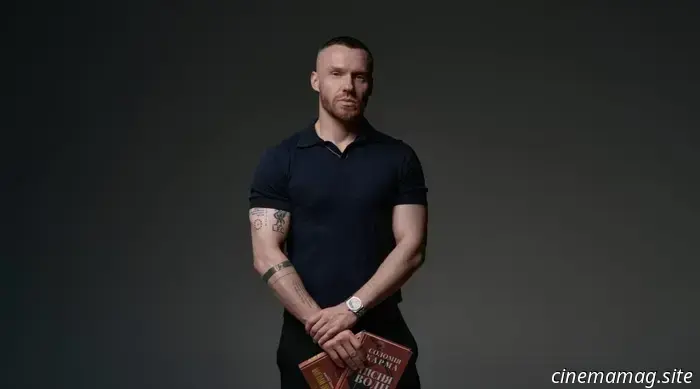
Dmytro Bielov presenting at an event
The Black List: Tough Scores and a Clear Standard
His final attempt was with The Black List, one of the industry's most recognized yet challenging platforms. He uploaded about ten scripts and paid for evaluations for each.
The outcomes were disheartening.
One script — a biopic about Elon Musk — received remarkably low scores: nearly all twos in various categories and just one three for dialogue. Nonetheless, Bielov continued to upload more scripts, purchasing further evaluations. Only one screenplay garnered favorable results: 6 for dialogue, 7 for characters, and 9 for setting. However, The Black List has a well-known benchmark: a score of 8 or higher usually prompts interest from managers, agents, and producers. Despite several attempts, Bielov never achieved that score. “I came close, but 'close' doesn’t count there,” he remarks. “If you’re below eight, no one contacts you.”
Ultimately, he halted all submissions. Nearly two years went by.
An Unexpected Email from Canada — and a Studio Affiliated with Netflix
After this lengthy break, Bielov unexpectedly received an email from a Canadian talent agency that collaborates with a Netflix-affiliated studio. They had reviewed one of his earlier scripts and requested more materials.
Within weeks, the studio acquired the screenplay for the minimum pilot rate. Although he wasn't considered for showrunning due to language barriers and a lack of industry experience, the sale was authentic and contractually binding.
“In the U.S., that amount wouldn’t make much difference,” he reflects. “In Ukraine, particularly during wartime, it opens up opportunities.”
Using a Hollywood Paycheck to Launch a Publishing House
Rather than pursuing additional screenwriting deals, Bielov invested the earnings into creating a small publishing house in Kyiv — Adaptationbooks. This imprint concentrates on Ukrainian literature influenced by the experience of war: fiction, nonfiction, personal narratives, and works by civilians and soldiers.
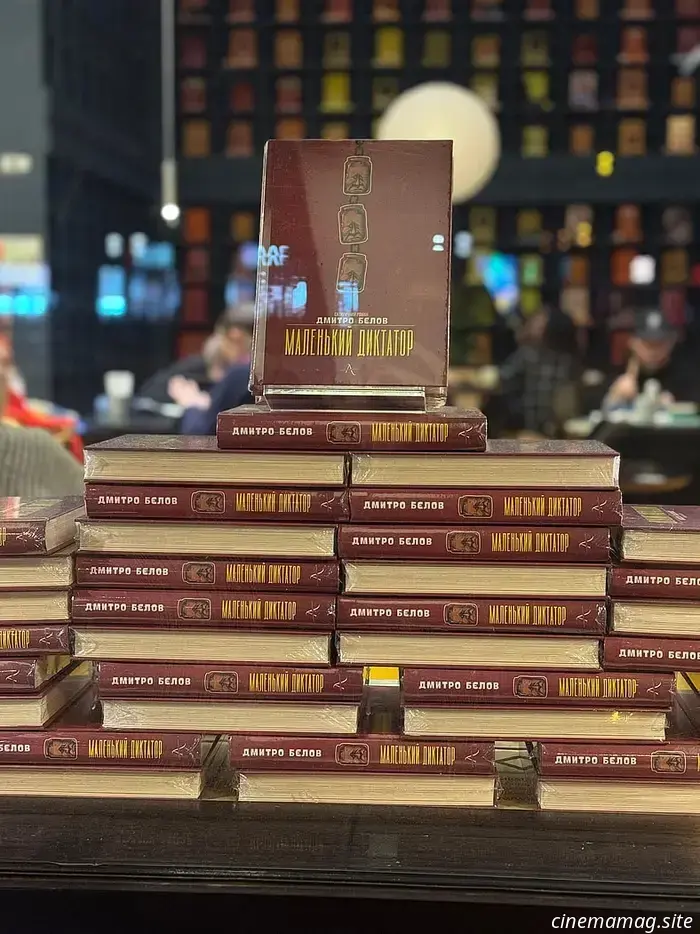
Books from AdaptationBooks showcased at Knyharnia Sens on Khreshchatyk, Kyiv
“We publish authors experiencing situations that most people cannot fathom,” he explains. “Some write from occupied territories, others from the army, and some from devastated towns. These narratives are important — and they need a dedicated platform.”
Adaptationbooks quickly established a unique identity, publishing literary works that confront themes of displacement, survival, trauma, resilience, and daily life amidst invasion. Bielov manages acquisitions, editing, and development, applying skills he honed over years of working with story structure in screenwriting.
A Non-Linear Career Trajectory
Bielov’s journey highlights a reality familiar to many budding screenwriters: breaking into Hollywood seldom follows a straightforward path. Years of effort might yield no feedback, and success often arises from indirect avenues rather than a linear trajectory.
“I spent years trying to reach that ‘8’ on The Black List,” he shares. “It never occurred. Instead, a different opportunity presented itself—one I hadn’t anticipated.”
Selling a screenplay to a Netflix-affiliated studio didn’t relocate Bielov to Los Angeles or launch a Hollywood career. However, it provided the financial capacity to foster something within Ukraine — a publishing house that amplifies the voices of those living through the war.
As he puts it: “The sale didn't dramatically alter my life. But it enabled me to effect change here. And that feels more substantial.”

Other articles
 A new adventure featuring the Ninth Doctor and Rose is set to be released in February.
Big Finish Productions is set to launch a completely new adventure featuring the Ninth Doctor and Rose Tyler in February 2026. The journeys of the Ninth Doctor carry on with The Ninth Doctor Adventures: Cloud…
A new adventure featuring the Ninth Doctor and Rose is set to be released in February.
Big Finish Productions is set to launch a completely new adventure featuring the Ninth Doctor and Rose Tyler in February 2026. The journeys of the Ninth Doctor carry on with The Ninth Doctor Adventures: Cloud…
 Additional LEGO Star Wars sets for Winter 2026 have been officially announced.
After an initial glimpse at LEGO's mid-scale AT-AT, Venator-Class Attack Cruiser, and the buildable BB-8 model, The LEGO Group has now revealed five additional sets from its Star Wars Winter 2026 collection.
Additional LEGO Star Wars sets for Winter 2026 have been officially announced.
After an initial glimpse at LEGO's mid-scale AT-AT, Venator-Class Attack Cruiser, and the buildable BB-8 model, The LEGO Group has now revealed five additional sets from its Star Wars Winter 2026 collection.
-MovieMaker-Magazine.png) Top 10 Crash Gambling Websites: Leading Crash Casino Games (2026) - MovieMaker Magazine
Crash gambling has emerged as one of the most thrilling trends in online gaming, and 2026 is set to be the largest year yet for enthusiasts of crash gaming. Participants
Top 10 Crash Gambling Websites: Leading Crash Casino Games (2026) - MovieMaker Magazine
Crash gambling has emerged as one of the most thrilling trends in online gaming, and 2026 is set to be the largest year yet for enthusiasts of crash gaming. Participants
 Four Movies to Watch from the 2025 Tallinn Black Nights Film Festival
In a year marked by hysteria and confusion, the one thing I genuinely sought from a film festival was an escape. I'm tired of films that attempt to present themselves as catalysts for political change. True art isn't created to persuade you of anything or serve as a tool.
Four Movies to Watch from the 2025 Tallinn Black Nights Film Festival
In a year marked by hysteria and confusion, the one thing I genuinely sought from a film festival was an escape. I'm tired of films that attempt to present themselves as catalysts for political change. True art isn't created to persuade you of anything or serve as a tool.
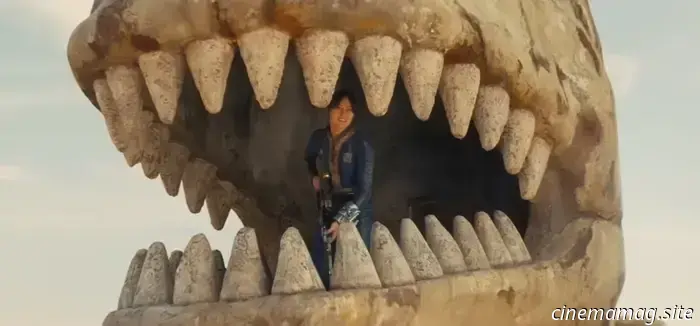 Check out Novac in the sneak peek clip for season 2 of Fallout.
Prime Video has released the initial clip from season 2 of its successful video game adaptation Fallout, just before its premiere next week. This sneak peek gives fans a look at Lucy (Ella Purnell), Dogmeat, and…
Check out Novac in the sneak peek clip for season 2 of Fallout.
Prime Video has released the initial clip from season 2 of its successful video game adaptation Fallout, just before its premiere next week. This sneak peek gives fans a look at Lucy (Ella Purnell), Dogmeat, and…
 Comic Book Sneak Peek – Vampirella: Armageddon #6
Dynamite Entertainment will publish Vampirella: Armageddon #6 this Wednesday, and you can view the official preview below… Vampirella and Walker persist in their journey across the blazing p…
Comic Book Sneak Peek – Vampirella: Armageddon #6
Dynamite Entertainment will publish Vampirella: Armageddon #6 this Wednesday, and you can view the official preview below… Vampirella and Walker persist in their journey across the blazing p…
How Writer Dmytro Bielov Entered Hollywood from a War-Torn Country - MovieMaker Magazine
Several narratives emerging from Ukraine today relate to film. One such story belongs to Dmytro Bielov, a screenwriter who has undergone a lengthy and challenging journey in the world of screenwriting.