
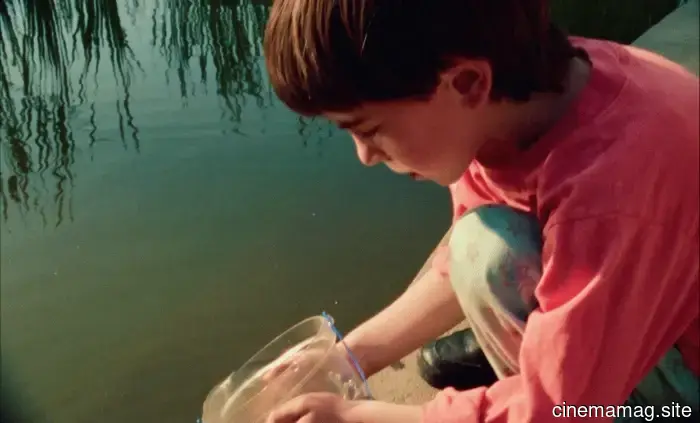
Remake Review: Ross McElwee’s Reflective Documentary Resonates with Humanity
“I once referred to myself as a filmmaker. I once referred to myself as your father.”
These two phrases echo like a mantra throughout Ross McElwee’s profoundly intimate documentary, Remake, which centers on the devastating loss of his 27-year-old son Adrian to a fentanyl overdose in 2016. This marks the director's first film in fifteen years; his previous work, Photographic Memory, also explored his relationship with Adrian to address themes of self-reflection regarding parenthood, perspective, and the passage of time. For decades, McElwee has been a pioneer in the realm of tangential documentary storytelling, a style recently embraced by creators like Nathan Fielder and John Wilson. This approach may seem spontaneous at first glance, but it involves careful research and meticulous editing. In contrast to much of his earlier work, which he edited himself, McElwee collaborated with master editor Joe Bini, known for his work on Grizzly Man and American Honey.
“Painstaking” is certainly a fitting descriptor for Remake. Behind McElwee’s calmly reassuring narration lies the undeniable realization that the journey to document his son was emotionally taxing. Why subject oneself to what feels like a continual assault on the heart? As the director articulates: “Reviewing the footage to assure myself that you’re alive, but also to confirm that you’re gone.” As the credits roll on Remake, leaving viewers to process the complex emotions it evokes, McElwee’s final voiceover to a son who can’t hear him resonates profoundly: “I’ll never stop loving you.” It might have sufficed had this film never reached an audience—his intention wasn’t to create it for others, as the narration directed to Adrian clearly indicates. He made it for the son he can no longer hold, in an attempt to confront his grief, guilt, and everlasting love.
For over 50 years, Ross McElwee has held a camera, capturing countless moments of those around him. In his most celebrated work, 1985’s Sherman’s March (newly restored in stunning detail), we see how projects can shift from their original concept (initially intended as a documentary on the consequences of General Sherman’s devastating march during the Civil War) to something far more personal and revealing about the filmmaker. The narrative quickly evolves into a cycle of him following women he becomes drawn to, only to be eventually rejected. There’s a therapeutic essence to McElwee’s filmmaking, which eludes straightforward categorization. Even Remake transcends being a mere tribute to a son; interspersed with footage of Adrian’s life, we see McElwee contend with his own serious health issues, a marriage being forged and subsequently disintegrating, as well as various professional successes and failures.
The film's title, Remake, arises from a misguided proposal he received for a Hollywood adaptation of Sherman’s March, set to transform the documentary into a fictional feature directed by Steve Carr, known for titles like Paul Blart: Mall Cop, Doctor Dolittle 2, and Daddy Day Care. This is not exactly the individual one would expect to be interested in Sherman’s March, let alone passionately advocating for its conversion into commercial entertainment. Nevertheless, Adrian perceives potential in the concept, as we witness multiple discussions between him and his father regarding the necessity of compromising artistic integrity for financial gain to fund what truly matters.
As McElwee chronicles Adrian's life, we periodically check on the development (or lack thereof) of the Sherman’s March adaptation, which shifts from a feature film to an hour-long television series, then to a (gulp) half-hour sitcom, ultimately leading to nothing. It presents a dry, humorously absurd satire reminiscent of an Albert Brooks film, but emphasized by its real-life stakes, and Remake never peaks with humor more than the scene where we see McElwee respond, a mix of confusion and exhaustion, to the marketing reel that pitches Sherman’s March as a TV show reminiscent of Modern Family rather than the deep, contemplative work he created.
While these two narratives might initially seem disconnected, they both reflect on the nature of art and perspective in storytelling. McElwee presents Adrian as a young boy; vibrant, engaging on camera, and brimming with innocence and vitality. For many parents, this is the enduring image they hold of their children. Over time, we observe Adrian evolve into someone grappling with his own struggles; the pain visible on his face as he clashes with his father over filming and his career choices. Yet, Adrian remains that bright child—we grasp the depth of his aspirations as he passionately shares his dreams of becoming a filmmaker and exploring various other fields.
In reflecting on Sherman’s March, McElwee reintroduces us to Charleen Swansea, a captivating figure who exudes energy whenever she appears on-screen, embodying a no-nonsense demeanor (she was the central subject of McElwee’s earlier film, Charleen or How Long Has This Been

Other articles
 Eleanor Coppola's documentary about the creation of Sofia Coppola's Marie Antoinette will be released soon.
Following Priscilla and her latest documentary Marc by Sofia, we’ve been eagerly anticipating Sofia Coppola's next project, especially after the announcement that plans for a reunion with Kirsten Dunst were abandoned. In the meantime, a fresh glimpse into the creation of one of her most celebrated films has finally been finished. MUBI has obtained
Eleanor Coppola's documentary about the creation of Sofia Coppola's Marie Antoinette will be released soon.
Following Priscilla and her latest documentary Marc by Sofia, we’ve been eagerly anticipating Sofia Coppola's next project, especially after the announcement that plans for a reunion with Kirsten Dunst were abandoned. In the meantime, a fresh glimpse into the creation of one of her most celebrated films has finally been finished. MUBI has obtained
 What Are the Top Platforms for Sourcing Models and Talent for a Production? - MovieMaker Magazine
Evaluate the top 5 model booking platforms for hiring models for productions in the U.S. in 2026.
What Are the Top Platforms for Sourcing Models and Talent for a Production? - MovieMaker Magazine
Evaluate the top 5 model booking platforms for hiring models for productions in the U.S. in 2026.
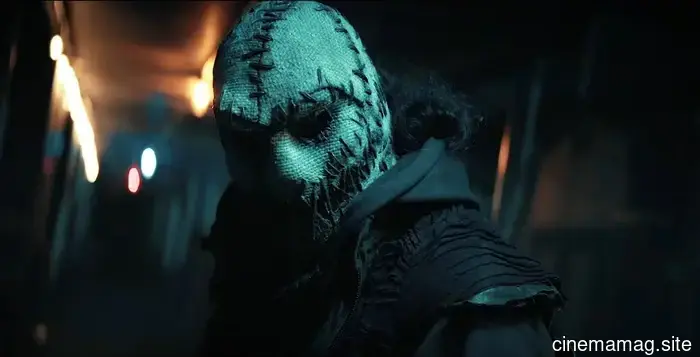 New trailer released for the Halloween-themed slasher film The Boy From Below.
Dread has released a new trailer for director Tory Jones' slasher film set in the 90s, The Boy From Below. The movie follows the inhabitants of Carpenter Falls as their Halloween celebrations are disrupted when a…
New trailer released for the Halloween-themed slasher film The Boy From Below.
Dread has released a new trailer for director Tory Jones' slasher film set in the 90s, The Boy From Below. The movie follows the inhabitants of Carpenter Falls as their Halloween celebrations are disrupted when a…
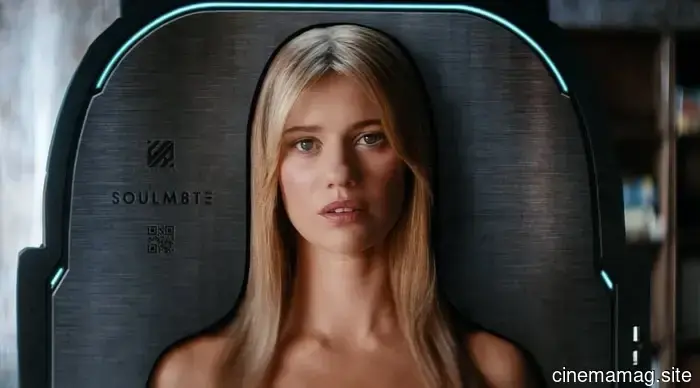 The trailer for the M3GAN spinoff SOULM8TE adds an erotic twist to the horror franchise.
Universal Pictures and Blumhouse have released the initial trailer for SOULM8TE, an erotic thriller set in the M3GAN universe. The movie follows a mourning engineer who is assigned to evaluate a new AI...
The trailer for the M3GAN spinoff SOULM8TE adds an erotic twist to the horror franchise.
Universal Pictures and Blumhouse have released the initial trailer for SOULM8TE, an erotic thriller set in the M3GAN universe. The movie follows a mourning engineer who is assigned to evaluate a new AI...
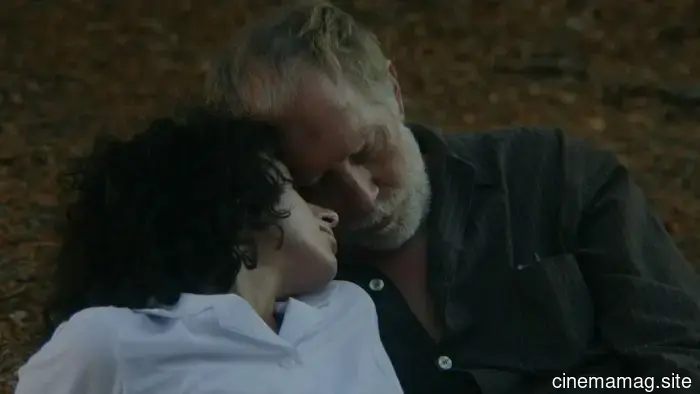 "Creating a Modern Erotic Thriller": Georgia Bernstein Discusses Night Nurse and Catherine Breillat
Sundance is seemingly a hub of thrill and exploration—a starting point for films that will shape the upcoming year and for filmmakers who will emerge as prominent figures in the years and decades to follow. However, this is not always the case; only a few premieres are truly worth viewing. From a distance, it was evident that one notable exception would be Georgia.
"Creating a Modern Erotic Thriller": Georgia Bernstein Discusses Night Nurse and Catherine Breillat
Sundance is seemingly a hub of thrill and exploration—a starting point for films that will shape the upcoming year and for filmmakers who will emerge as prominent figures in the years and decades to follow. However, this is not always the case; only a few premieres are truly worth viewing. From a distance, it was evident that one notable exception would be Georgia.
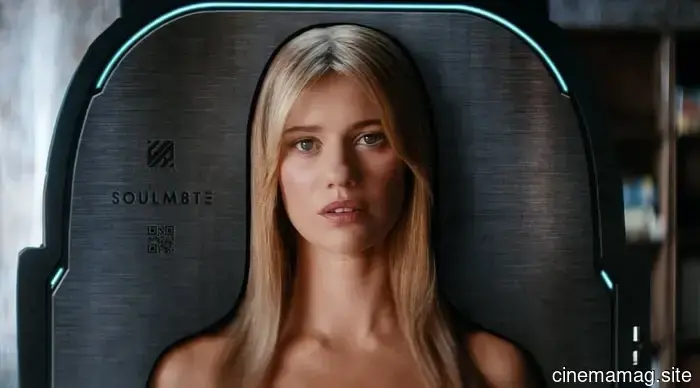 The trailer for the M3GAN spinoff SOULM8TE adds an erotic twist to the horror franchise.
Universal Pictures and Blumhouse have released the initial trailer for SOULM8TE, the forthcoming erotic thriller located within the M3GAN universe. The story follows a mourning engineer assigned to evaluate a new AI...
The trailer for the M3GAN spinoff SOULM8TE adds an erotic twist to the horror franchise.
Universal Pictures and Blumhouse have released the initial trailer for SOULM8TE, the forthcoming erotic thriller located within the M3GAN universe. The story follows a mourning engineer assigned to evaluate a new AI...
Remake Review: Ross McElwee’s Reflective Documentary Resonates with Humanity
"I once referred to myself as a filmmaker. I once referred to myself as your father." These two phrases echo like a mantra throughout Ross McElwee's latest intensely personal documentary, Remake, which centers chiefly on the heartbreaking loss of his 27-year-old son Adrian due to a fentanyl overdose in 2016. This marks the director's first film in fifteen years— the