
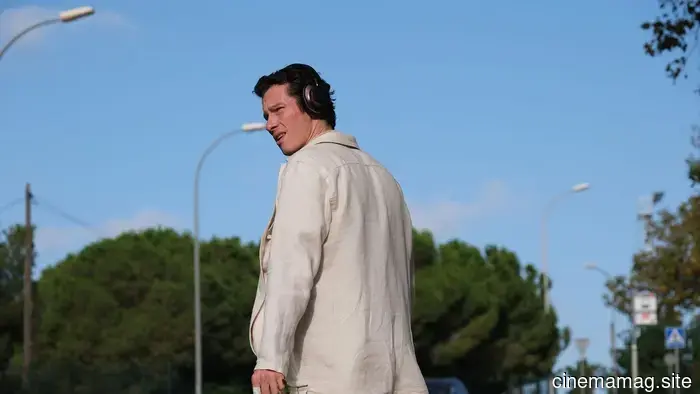
Rosebush Pruning Assessment: An Overly Ambitious, Confused Effort at Cinematic Boundary-Pushing
Note: This review was initially published as part of our 2026 Berlinale coverage. The film is set to open on July 24.
Crafting cruel or nihilistic characters into darkly appealing protagonists demands a surprisingly nuanced approach. We have become so accustomed to seeing this done seamlessly that a film like Rosebush Pruning serves as a valuable reminder of the challenge involved. The latest work from Brazilian director Karim Aïnouz (known for Futuro Beach and The Invisible Life of Euridice Gusmão) immerses its brief runtime in a transgressive ambiance, yet fails to truly make its caustic characters intriguing or to introduce an outsider who may elicit our sympathy or concern. It raises the question: why engage in such dark antics if there are no "normies" to unsettle?
Rosebush Pruning was penned by Efthimis Filippou—the writer responsible for nearly every Yorgos Lanthimos film preceding The Favourite—as a modern reimagining of Marco Bellocchio’s Fists in the Pocket, a brutal 1965 satire of the Italian bourgeoisie that eventually earned a spot on the cultural ministry’s list of 100 films that best portray the national psyche. Aïnouz relocates the story to Catalonia, but what stands out are not the visuals, but the actors Aïnouz has employed in his taboo scenarios. One scene, reminiscent of Lanthimos’ delightfully macabre early films, shows a son pleasuring his blind father while the older man frantically brushes his teeth—a moment likely to grab headlines following the film’s Berlinale premiere this weekend, even without considering that these characters are portrayed by Tracy Letts and Callum Turner, the latter still favored by bookmakers to become the next James Bond.
Set in and around Girona, the film's ensemble cast shines no brighter than the film’s opening views of the Mediterranean. Letts portrays the wealthy, depraved patriarch of four adult children whose supposed all-consuming love for fashion seldom exceeds name-dropping the industry's most elite brands—though there is a playful scene involving floating Bottega loafers. The standout among them is Ed (Turner), a handsome slacker who claims to have renounced literature. He is the brother of Anna (Riley Keough), a dangerous flirt who relishes teasing the local butcher as much as she does her older sibling, Jack (Jamie Bell), whose unsettling infatuation is mirrored by the youngest brother, Robert (Lukas Gage), who experiences occasional seizures and, in one of the film’s references to menstruation, takes a knife to his inner thigh, asking Jack to lick the blood off. No one has the power to choose their family.
Fans of Lanthimos who may feel disillusioned by his recent work will understandably find themselves intrigued by that synopsis. The issues with Pruning stem less from its script and more from Aïnouz’s maximalist, erratic style of storytelling. Throughout the film, we hear that Jack is the most kind and thoughtful—a characterization the film does almost nothing to display, let alone use as a counterbalance to the relentless bad taste presented on screen. There are moments when it seems Jack’s girlfriend, Martha (Elle Fanning), a classical guitarist portrayed as an innocent among more predatory figures, might embody these redeeming traits, but she quickly falls victim to Aïnouz’s inconsistent character portrayals—which seems like a squandered chance given Fanning’s established screen presence. Through Ed’s narration, we follow the plot to an eventual twist that feels as obvious as the violent pruning that follows.
The cast, for the most part, rise to the challenge and deserve commendation for tackling such unconventional material. Keough continues to be a captivating presence (with a performance reminiscent of the subtle menace she exhibited in American Honey a decade ago), and Letts embraces the absurdity of the script with notable enthusiasm (the scene of him joyfully moving to loud music in a car’s backseat is certainly amusing), but the performances rarely mesh well together, resulting in a stilted dynamic that emphasizes the unique chemistry Filippou achieved with Lanthimos in films like Dogtooth. Jamie Bell, channeling the physical intensity of his Nymphomaniac days, is somewhat miscast in what is arguably Pruning’s most crucial role: the lone connection between the siblings’ toxic environment and the outside world, as well as a link to their apparently deceased mother—who, as noted, eventually appears as Pamela Anderson.
Despite its pretentiousness and incoherence, the film deserves recognition for not dragging on; at just over an hour and a half, Aïnouz swiftly navigates Filippou’s script with minimal hassle and an abundance of style. Released in 1965, Bellocchio’s original was born out of the same societal anxieties that would later inspire Pasolini to create Salò a decade later—yet another exploration into
Other articles
 Dynamite Entertainment presents a crossover series featuring Red Sonja and Barbarella.
Dynamite Entertainment has revealed that the She-Devil with the Sword and the Siren of the Spaceways will meet for the first time this November in a limited series comic book crossover.
Dynamite Entertainment presents a crossover series featuring Red Sonja and Barbarella.
Dynamite Entertainment has revealed that the She-Devil with the Sword and the Siren of the Spaceways will meet for the first time this November in a limited series comic book crossover.
 Comic Book Sneak Peek – Predator vs. The Planet of the Apes #1
Marvel Comics is set to release its new crossover series with 20th Century Studios next week, kicking off with Predator vs. The Planet of the Apes #1. You can check out a sneak preview with the official teaser…
Comic Book Sneak Peek – Predator vs. The Planet of the Apes #1
Marvel Comics is set to release its new crossover series with 20th Century Studios next week, kicking off with Predator vs. The Planet of the Apes #1. You can check out a sneak preview with the official teaser…
 Beast Kingdom reveals new Knightmare Batman and Superman Dynamic 8ction Heroes figures from Batman v Superman: Dawn of Justice.
Beast Kingdom has formally introduced its latest Knightmare Batman and Superman 2.0 Dynamic 8ction Heroes figures inspired by Zack Snyder’s 2016 DC hit Batman v Superman: Dawn of Justice.
Beast Kingdom reveals new Knightmare Batman and Superman Dynamic 8ction Heroes figures from Batman v Superman: Dawn of Justice.
Beast Kingdom has formally introduced its latest Knightmare Batman and Superman 2.0 Dynamic 8ction Heroes figures inspired by Zack Snyder’s 2016 DC hit Batman v Superman: Dawn of Justice.
 Go wild with the final trailer for Coyote vs. ACME.
Ketchup Entertainment has unveiled the final trailer for the highly awaited Looney Tunes movie, Coyote vs. ACME, highlighting the perils that Wile E. Coyote and his attorney, portrayed by Will Forte, are facing.
Go wild with the final trailer for Coyote vs. ACME.
Ketchup Entertainment has unveiled the final trailer for the highly awaited Looney Tunes movie, Coyote vs. ACME, highlighting the perils that Wile E. Coyote and his attorney, portrayed by Will Forte, are facing.
 Weapons director Zach Cregger revamps Resident Evil with the release of a new adaptation trailer.
As the September release date approaches, Sony Pictures has unveiled a new trailer for director Zach Cregger’s (Weapons) forthcoming reimagining of Resident Evil. This survival horror film centers around a medic...
Weapons director Zach Cregger revamps Resident Evil with the release of a new adaptation trailer.
As the September release date approaches, Sony Pictures has unveiled a new trailer for director Zach Cregger’s (Weapons) forthcoming reimagining of Resident Evil. This survival horror film centers around a medic...
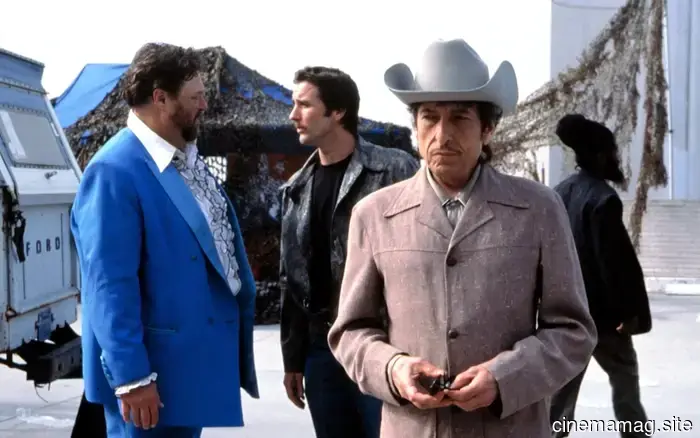 NYC Weekend Preview: Masked and Anonymous, The Piano, Maggie Cheung, and More
NYC Weekend Watch is our weekly summary of repertory selections. Roxy Cinema will feature Larry Charles and Bob Dylan's Masked and Anonymous in 35mm this Friday and Sunday; a screening of Johnny Guitar is scheduled for Friday and Saturday, with Keramat also showing on Saturday. The Cycle will be screened on Friday night. Film at Lincoln Center continues to show Tsai Ming-liang’s The Hole.
NYC Weekend Preview: Masked and Anonymous, The Piano, Maggie Cheung, and More
NYC Weekend Watch is our weekly summary of repertory selections. Roxy Cinema will feature Larry Charles and Bob Dylan's Masked and Anonymous in 35mm this Friday and Sunday; a screening of Johnny Guitar is scheduled for Friday and Saturday, with Keramat also showing on Saturday. The Cycle will be screened on Friday night. Film at Lincoln Center continues to show Tsai Ming-liang’s The Hole.
Rosebush Pruning Assessment: An Overly Ambitious, Confused Effort at Cinematic Boundary-Pushing
Note: This review was first released as part of our coverage for the 2026 Berlinale. The film premieres on July 24. Shaping cruel or nihilistic characters into compelling protagonists demands a subtly precise approach. We have become so accustomed to seeing this executed smoothly that a film like Rosebush Pruning might serve as a valuable reminder of