
The End of Oak Street Review: David Robert Mitchell's Playful Yet Forgettable Comeback
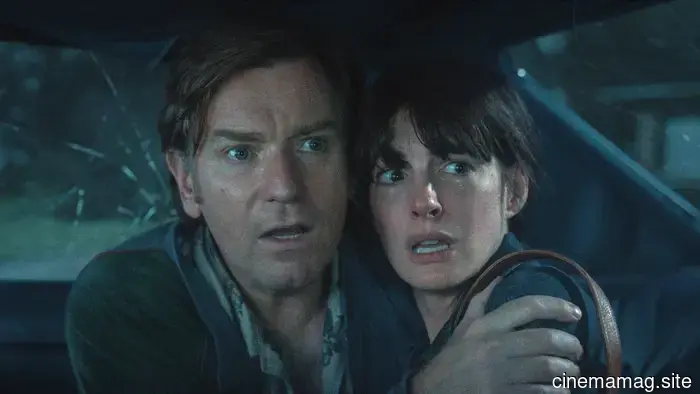
The End of Oak Street begins with an exhilarating energy, as Michael Giacchino's confident, heavyweight score whisks us directly from the production cards into a lively 1982 suburban block party in Flowervale, Michigan, where the fashion and designs of the ‘70s still dominate the clothing, home furnishings, automobiles, and more. Then we meet the Platts: Greg (Ewan McGregor) and Denise (Anne Hathaway) are facing marital difficulties, and their teenage children, Audrey (Maisy Stella) and Brian (Christian Convery), are aware of it. However, the kids have their own struggles, including crushes and bullying incidents reminiscent of Jumanji. Suddenly, the Platts—and everyone else within a two-mile vicinity—face a shared crisis: their neighborhood has mysteriously been transported to the Mesozoic era, also known as the Age of Dinosaurs, due to an otherworldly event spanning ages.
Flowervale, a typical suburban area, has been neatly taken out of the present, as if divinely removed with a stencil and placed into a prehistoric oven to be "baked," leaving no means of escape. Everyday issues like jobs, crushes, yard work, smoking, marital problems, writing novels, bothersome neighbors, and other commonplace conflicts become insignificant (notably, the only exception is alcoholism). Life now revolves around one imperative: survival. Outnumbered by enormous predatory birds, reptiles, and various eel-snake creatures, the Platts’ chances don’t look good. What follows is a relentless pursuit filled with blockbuster thrills, grotesque yet comedic fatalities, a plethora of rare and creatively designed dinosaurs, and stunning visual effects that bring the scenario vividly to life.
While the film lacks depth in character development amidst the action sequences, the sequences themselves are striking, with the director not shying away from inventive kills. During an early escape attempt, an aerial shot captures the Platts attempting to flee, only to confront the ancient jungle, resulting in the demise of at least 20 neighbors. It’s both horrifying and darkly amusing at once. We encounter feathered raptors, turtle-like creatures with shells akin to Bowser's, gigantic eel-snake basilisks with razor-sharp teeth, and lanky, sharp-nosed T-Rexes adorned with a furry fish-like spine. It's almost like stepping into the Field Museum. Cinematographer Mike Gioulakis offers a visually pleasing yet familiar style that shines more in the Jurassic Park-quality visual effects than in the captured live-action footage.
Despite the omnipresent danger resulting from suburban life, the film possesses a notable thematic depth. It presents a poignant metaphor for feeling trapped in suburbia—now represented as a literal, inescapable cycle of destruction and suffocating existential dread. This can resonate powerfully, as the repetitive nature of life that fosters dishonesty, discontent, and self-destructive tendencies among the Platts has taken on a tangible form that ironically compels them to confront it. Unlike The Ice Storm, the acclaimed Ang Lee film that sharply examines what suburbia produces, this theme is effectively portrayed with stakes relatable even to those who live in and appreciate suburban life. Let's face it: the fear of being brutally killed by dinosaurs is a universal concern that transcends politics. (Additionally, this setting serves as a humorous yet truthful narrative device highlighting our deep affection for our pets, regardless of circumstances.)
Writer-director David Robert Mitchell brings us a film that embraces the Amblin spirit while leaning more towards J.J. Abrams-style Amblin, reminiscent of Super 8 (which was stylistically influenced by Amblin and produced under Spielberg's guidance). For better or worse, Oak Street feels as though it could have been co-directed by Abrams, who produced it through his Bad Robot company. Positively, Abrams has demonstrated his adeptness at crafting big-budget Spielberg-like adventures, and that talent is evident here. On the downside, David Robert Mitchell had established himself as a unique voice in the industry with his first two films, It Follows and Under the Silver Lake, leading one to question why he has now produced something that feels distinctly influenced by Amblin, whether through Spielberg, Abrams, Goonies, or Jumanji. It's clear that Oak Street is attempting to tap into the Stranger Things phenomenon and the cultural void it left after its conclusion eight months ago.
Mitchell infuses some personal directorial style into the film, such as a family conversation shot mainly in split-diopter, seemingly suggesting that “De Palma can also be Amblin.” The overall grim tone reminiscent of his earlier works can also be felt here; Mitchell evokes shades of Donnie Darko through the focus on a fractured family within the context of suburban wormholes and dark humor. This sense of humor differs significantly from what Abrams or Spielberg typically offer. Both directors possess a similar trait in their films but seldom prompt us to
Other articles
 In 'Flavor of the Month,' Nathan Xia addresses issues of stereotypical casting.
Recently, Nathan Xia had an opportunity to audition for a major franchise that was looking for an Asian American actor with martial arts skills, and he fully committed to the process.
In 'Flavor of the Month,' Nathan Xia addresses issues of stereotypical casting.
Recently, Nathan Xia had an opportunity to audition for a major franchise that was looking for an Asian American actor with martial arts skills, and he fully committed to the process.
 Union County Review: Discovering Grace in the Gradual, Humbling Journey of Recovery
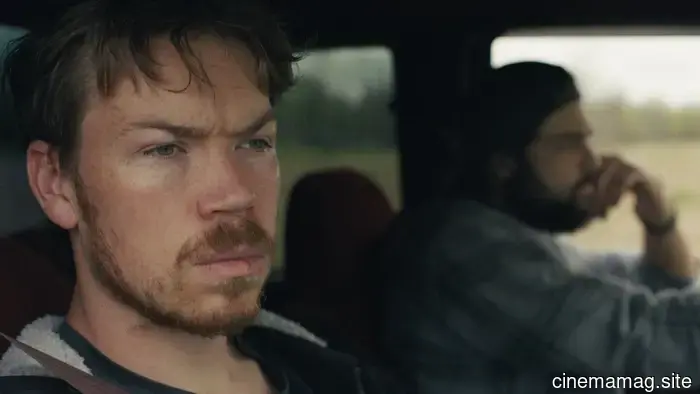
Please note: This review was initially published during our coverage of Sundance 2026. The film will premiere on August 14. Last summer, while The Bear was in the midst of its fourth season, Will Poulter walked into the show's namesake restaurant in Chicago, leaving the kitchen staff visibly stunned by his good looks. This wasn’t the first time such a reaction had occurred.
Union County Review: Discovering Grace in the Gradual, Humbling Journey of Recovery
Please note: This review was initially published during our coverage of Sundance 2026. The film will premiere on August 14. Last summer, while The Bear was in the midst of its fourth season, Will Poulter walked into the show's namesake restaurant in Chicago, leaving the kitchen staff visibly stunned by his good looks. This wasn’t the first time such a reaction had occurred.
.jpg) Film Review – The Brink of War (2026)
The Brink of War, 2026. Created and directed by Michael Russell Gunn. Featuring Jared Harris, Jeff Daniels, Branka Katić, Hope Davis, J.K. Simmons, Aya Cash, Guy Burnet, John Ross Bowie, Adrian Rawlins…
Film Review – The Brink of War (2026)
The Brink of War, 2026. Created and directed by Michael Russell Gunn. Featuring Jared Harris, Jeff Daniels, Branka Katić, Hope Davis, J.K. Simmons, Aya Cash, Guy Burnet, John Ross Bowie, Adrian Rawlins…
 Black Zombie Trailer Uncovers the Disturbing Origins of a Horror Classic
Selected for the SXSW Film Festival 2026, Hot Docs 2026, Fantasia International Film Festival, and the 2026 Black Star Film Festival, Maya Annik Bedward's documentary Black Zombie is set for a theatrical release next month. Prior to its debut on September 11 in New York City and Los Angeles, Kino Lorber has unveiled the initial trailer.
Black Zombie Trailer Uncovers the Disturbing Origins of a Horror Classic
Selected for the SXSW Film Festival 2026, Hot Docs 2026, Fantasia International Film Festival, and the 2026 Black Star Film Festival, Maya Annik Bedward's documentary Black Zombie is set for a theatrical release next month. Prior to its debut on September 11 in New York City and Los Angeles, Kino Lorber has unveiled the initial trailer.
 Netflix releases the initial trailer for Monster: The Lizzie Borden Story.
Netflix has released the initial teaser trailer for Monster: The Lizzie Borden Story, the fourth installment in the true-crime anthology series by Ryan Murphy and Ian Brennan, featuring Ella Beatty in the role of…
Netflix releases the initial trailer for Monster: The Lizzie Borden Story.
Netflix has released the initial teaser trailer for Monster: The Lizzie Borden Story, the fourth installment in the true-crime anthology series by Ryan Murphy and Ian Brennan, featuring Ella Beatty in the role of…
 Union County Review: Discovering Grace in the Gradual, Humbling Journey of Recovery
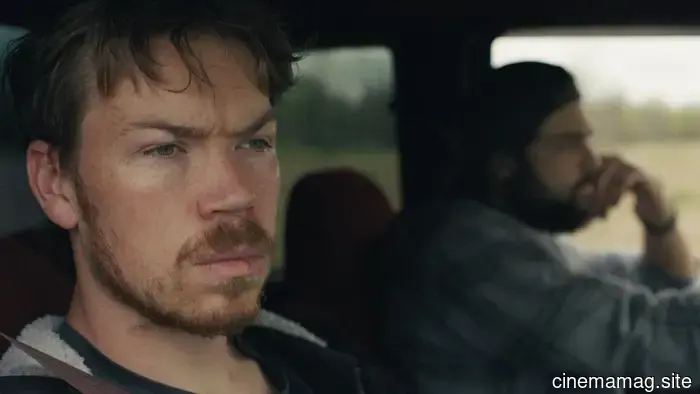
Note: This review was initially published during our 2026 Sundance coverage. The film premieres on August 14. Last summer, during the fourth season of The Bear, Will Poulter made an entrance into the show’s namesake Chicago restaurant, leaving the kitchen staff stunned by his attractiveness. This reaction wasn’t particularly novel.
Union County Review: Discovering Grace in the Gradual, Humbling Journey of Recovery
Note: This review was initially published during our 2026 Sundance coverage. The film premieres on August 14. Last summer, during the fourth season of The Bear, Will Poulter made an entrance into the show’s namesake Chicago restaurant, leaving the kitchen staff stunned by his attractiveness. This reaction wasn’t particularly novel.
The End of Oak Street Review: David Robert Mitchell's Playful Yet Forgettable Comeback
The End of Oak Street begins with energetic enthusiasm, as Michael Giacchino's confident, powerful score transports us directly from the production cards to a lively block party in 1982 Flowervale, Michigan. Here, the fashion and design of the ‘70s dominate everything—clothing, home decor, cars, you name it. From this point, it's Meet the...