
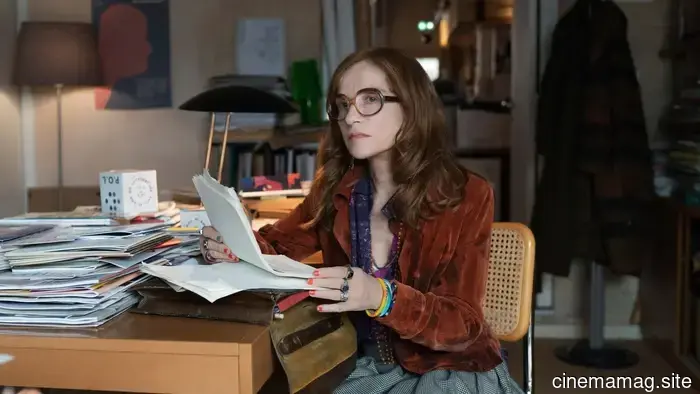
Cannes Review: Asghar Farhadi’s Parallel Tales Offers an Ambitious Yet Tedious Interpretation of Kieślowski
After two decades of storytelling, Iranian Oscar winner Asghar Farhadi has made one thing very clear: he operates in a grey area, and so should we.
"Parallel Tales," Farhadi’s tenth film (and his second in French), fuses elements of "Rear Window," "Stranger Than Fiction," and "Peeping Tom" (with a hint of "The Godfather") but lacks the genre-specific traits associated with them. In many ways, "Parallel Tales" represents both a culmination and an extension of Farhadi’s filmography, emphasizing its morally ambiguous essence, which encourages viewers to reevaluate their initial judgments about the five main characters: a novelist who observes her neighbors for inspiration; an immigrant she mentors who does the same; two brothers who craft sound effects for films; and one of their wives who collaborates with them.
The characters in "Parallel Tales" frequently navigate between dreams, written narratives, and reality, a narrative technique that blurs the lines of identity, construction, and actuality. It takes about an hour to fully grasp the intricate 140-minute film, which draws inspiration from Krzysztof Kieślowski’s sixth segment of "Dekalog," expanded into feature form in "A Short Film About Love."
Sylvie (Isabelle Huppert) is a grumpy, voyeuristic novelist in her sixties, living alone in a Paris apartment that’s been in her family for generations. Through her father’s telescope, she watches Nita (Virginie Efira), whose real name is Anna, as she works across the street with two brothers, Christophe and Pierre, also known as Théo (Pierre Niney) and Nicolas (Vincent Cassel), in a foley studio creating film sound design. Sylvie imagines Nita as the object of desire for both brothers, whose relationship becomes strained when one of them has an affair with her after a late night at the studio. In reality, Pierre is married to Anna, while Théo harbors feelings for his brother's wife. Both narratives reflect heartbreak and irrational drama, but they yield remarkably different outcomes.
Simultaneously, Adam (Adam Bessa) is a morally principled, homeless thirty-something who retrieves a woman’s stolen wallet. Due to a series of events, he ends up living with Sylvie in her apartment as her assistant. Before long, he adopts the same voyeuristic tendencies as Sylvie in his quest to write his own novel without her knowledge. He starts to follow Anna regularly, aiming to share Sylvie's story, stalking her in hopes of creating opportunities to present Sylvie's novel as his own. Initially, Anna seems mildly charmed and feels safe, but as Adam continues to ignore her requests to stop, the tension escalates.
The complex narrative can be ambitious—sometimes tedious, sometimes intriguing with its unique mystery that draws you in—but aspects such as the music (a violin drenched in excessive reverb, alternating with an overly sentimental piano that clashes with the film's tone), uninspiring cinematography, and lackluster editing leave much to be desired. While Farhadi attempts humor, and Huppert occasionally manages it (for example, using a toaster to light her cigarette), the comedic elements feel disconnected and underdeveloped. Nevertheless, Farhadi and Massoumeh Lahidji’s dialogue serves as a strong driving force of moral ambiguity throughout the story, holding the viewer's attention during the extended runtime, provided they engage with it.
In Farhadi's films, black-and-white ethics have never found a home. The writer-director has built his career around presenting narratives that mirror our experiences in life. He strips away omniscience, instead showcasing the reality that we all have a limited (rather than divine) understanding of the unfolding stories in our lives. We uncover troubling truths about Sylvie’s past and believe we have clarity, only to discover later that our assumptions were incorrect, which alters our entire perspective. We make judgments, convinced we have all the information, only to realize we still only grasp half the story, with additional factors to consider. This cyclical revelation continues throughout the film.
This narrative technique is what keeps "Parallel Tales" engaging, but we expect more than just a clever puzzle from Farhadi. He has set high standards for himself, and each new film must meet that challenge. "Parallel Tales" struggles to achieve the lofty leap it attempts, yet it cannot be dismissed. As always, Huppert, Cassel, and Efira deliver standout performances that render the film significantly more impactful. A cameo by Catherine Deneuve adds an extra touch, marking one of the two titles presented at Cannes this year.
"Parallel Tales" premiered at the 2026 Cannes Film Festival.
Other articles
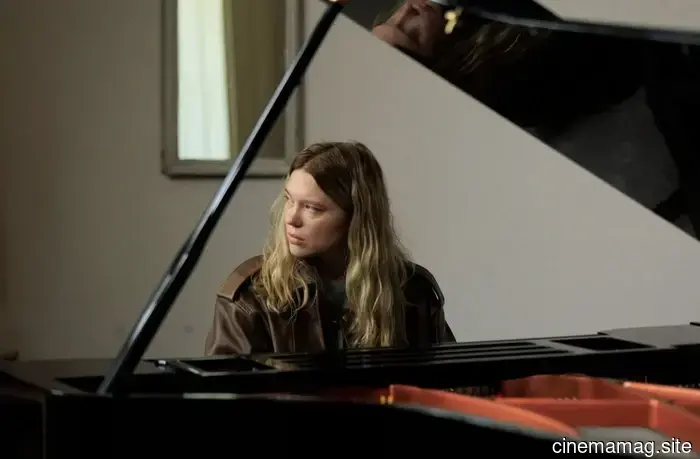 Cannes Review: Gentle Monster Is a Skillfully Executed Drama Following Betrayal
“Gaze into my eyes / can you notice they’re wide open / would I deceive you?” These lyrics hang momentarily in the air like a gentle whisper before the piano melodies gently usher them away, leading us into Gentle Monster, the newest work from Corsage director Marie Kreutzer. One could
Cannes Review: Gentle Monster Is a Skillfully Executed Drama Following Betrayal
“Gaze into my eyes / can you notice they’re wide open / would I deceive you?” These lyrics hang momentarily in the air like a gentle whisper before the piano melodies gently usher them away, leading us into Gentle Monster, the newest work from Corsage director Marie Kreutzer. One could
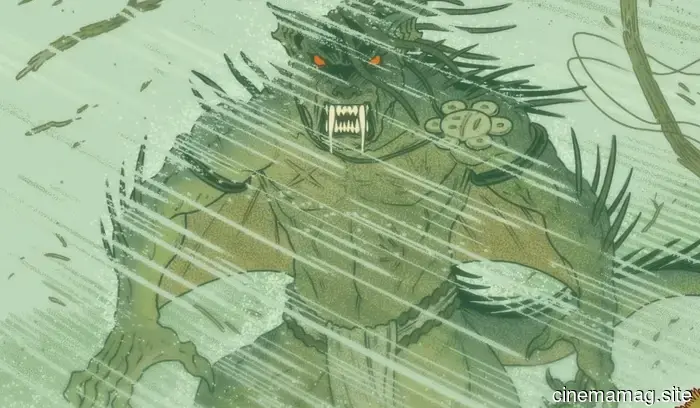 Exclusive Interview – Julio Anta, the writer of Beast of Borikén, and artist Daniel Irizarri.
Rachel Bellwoar speaks with Julio Anta and Daniel Irizarri regarding their forthcoming comic book series, Beast of Borikén. Loli is not the only one frustrated that developers are aiming to construct a resort in...
Exclusive Interview – Julio Anta, the writer of Beast of Borikén, and artist Daniel Irizarri.
Rachel Bellwoar speaks with Julio Anta and Daniel Irizarri regarding their forthcoming comic book series, Beast of Borikén. Loli is not the only one frustrated that developers are aiming to construct a resort in...
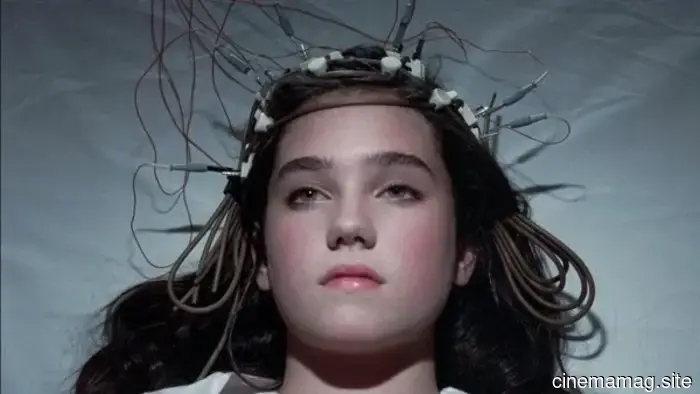 10 Must-Watch Italian Horror Films from the 1980s
Casey Chong presents ten must-see Italian horror films from the 1980s. While the 1970s represented the peak of Italian horror, providing us with genre-defining masterpieces like The Bird with the Crystal Plumage...
10 Must-Watch Italian Horror Films from the 1980s
Casey Chong presents ten must-see Italian horror films from the 1980s. While the 1970s represented the peak of Italian horror, providing us with genre-defining masterpieces like The Bird with the Crystal Plumage...
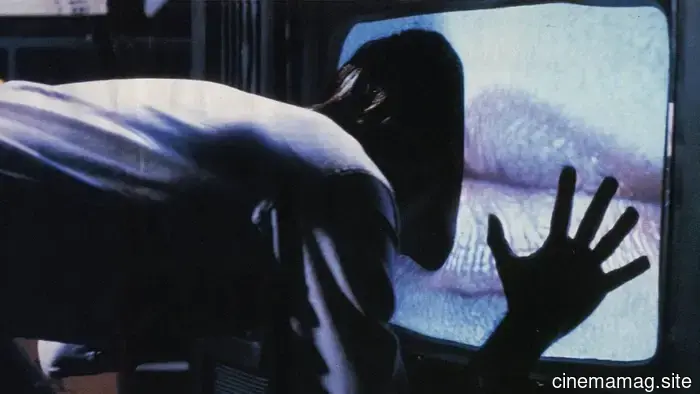 Peak Paranoia: The Timeliness of David Cronenberg's 1980s Body Horror Films
Adam Page discusses the relevance of David Cronenberg’s body horror films from the 1980s. A notable moment in Videodrome (1983) features James Woods as he reaches into his own abdomen. Not thr...
Peak Paranoia: The Timeliness of David Cronenberg's 1980s Body Horror Films
Adam Page discusses the relevance of David Cronenberg’s body horror films from the 1980s. A notable moment in Videodrome (1983) features James Woods as he reaches into his own abdomen. Not thr...
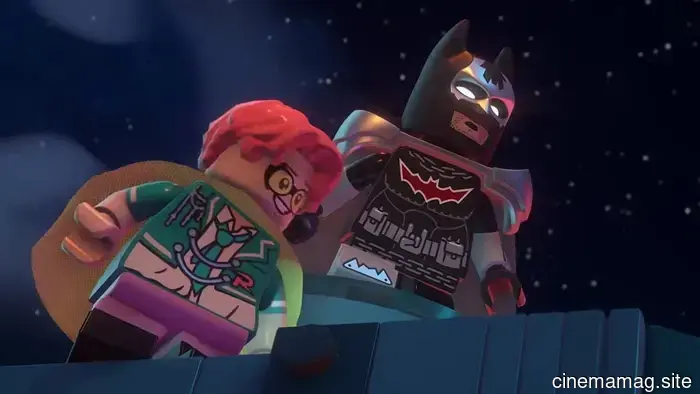 The latest trailer for LEGO Batman: Legacy of the Dark Knight showcases the extras included in the Deluxe Edition.
Warner Bros. Games has unveiled a new trailer (see below) that highlights all the bonus features available in the Deluxe Edition of LEGO Batman: Legacy of the Dark Knight. There's a wealth of extra content to explore…
The latest trailer for LEGO Batman: Legacy of the Dark Knight showcases the extras included in the Deluxe Edition.
Warner Bros. Games has unveiled a new trailer (see below) that highlights all the bonus features available in the Deluxe Edition of LEGO Batman: Legacy of the Dark Knight. There's a wealth of extra content to explore…
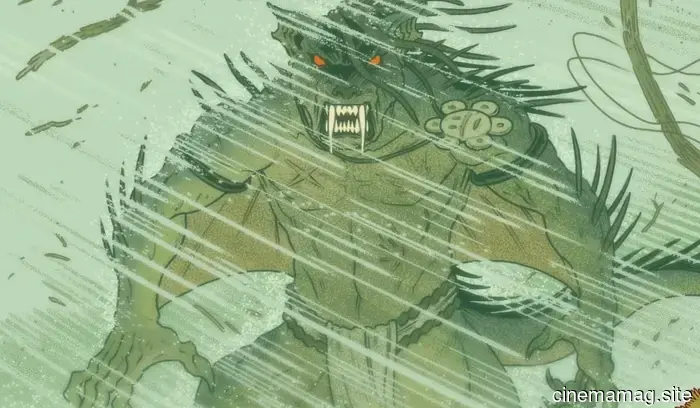 Exclusive Interview – Julio Anta, writer of Beast of Borikén, and artist Daniel Irizarri
Rachel Bellwoar talks with Julio Anta and Daniel Irizarri regarding their forthcoming comic book series, Beast of Borikén. Loli is not the only one frustrated by the developers' plans to construct a resort in…
Exclusive Interview – Julio Anta, writer of Beast of Borikén, and artist Daniel Irizarri
Rachel Bellwoar talks with Julio Anta and Daniel Irizarri regarding their forthcoming comic book series, Beast of Borikén. Loli is not the only one frustrated by the developers' plans to construct a resort in…
Cannes Review: Asghar Farhadi’s Parallel Tales Offers an Ambitious Yet Tedious Interpretation of Kieślowski
After twenty years of filmmaking, Iranian Oscar laureate Asghar Farhadi has made it very clear: he exists in the grey area, and we ought to as well. Parallel Tales, Farhadi’s tenth film (and his second in French), combines elements of Rear Window, Stranger Than Fiction, and Peeping Tom (with a hint of The Godfather) without