
Peak Paranoia: The Timeliness of David Cronenberg's 1980s Body Horror Films
Adam Page discusses the renewed relevance of David Cronenberg’s body horror films from the 1980s.
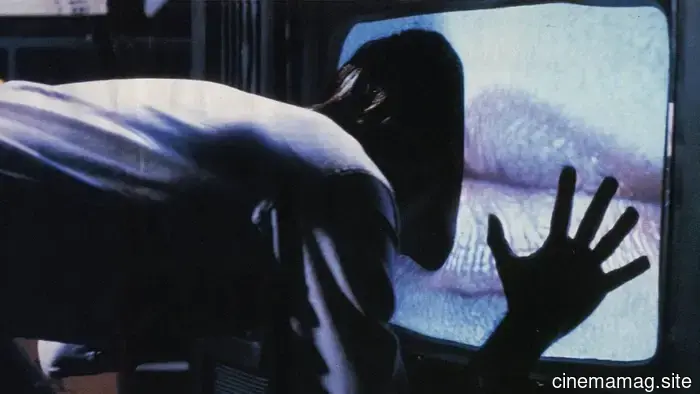
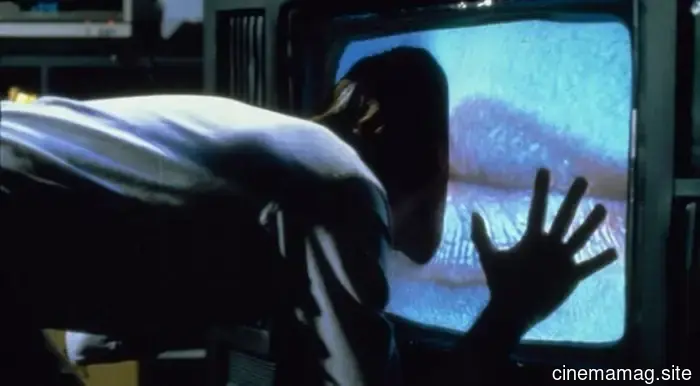
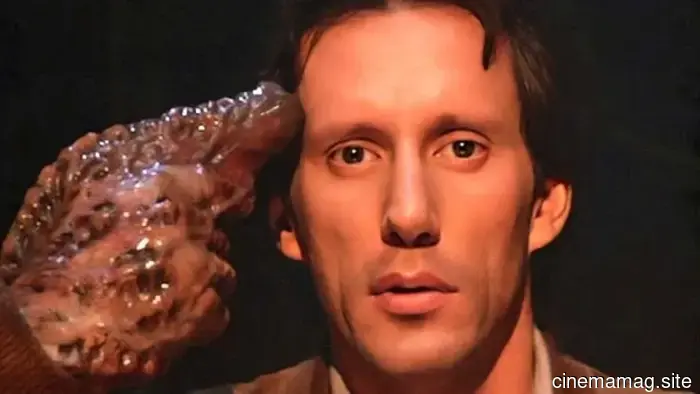
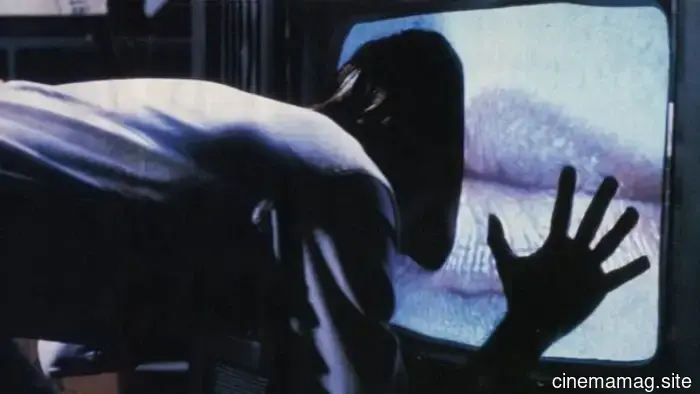
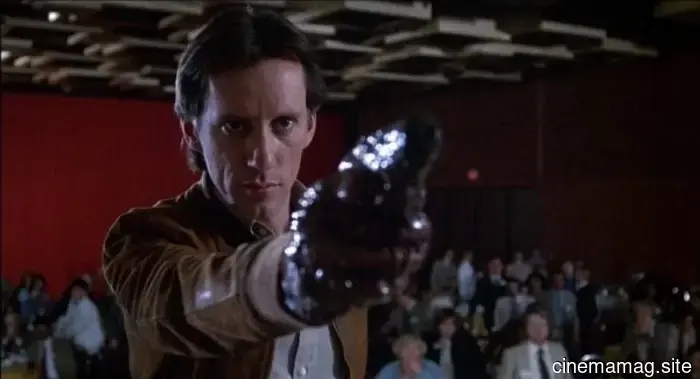
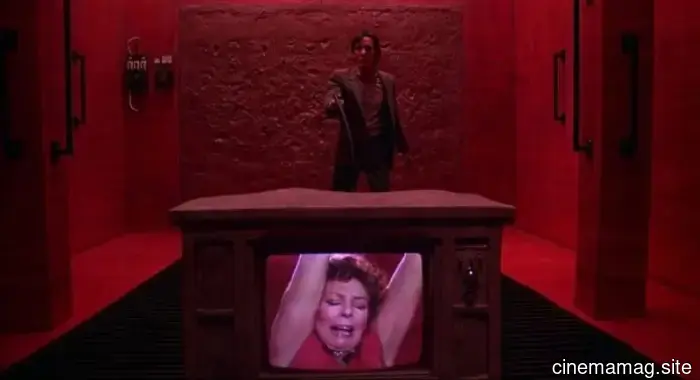
In Videodrome (1983), there’s a striking scene where James Woods reaches into his own stomach—not just through it, but directly inside. His torso opens up quietly, resembling a VHS slot, and he extracts a warm gun that has been hidden there, seemingly unfazed by the experience. Cronenberg created this film in 1983 when he was a Canadian director with a solid cult following and a reputation for unsettling viewers. Some critics dubbed him the “Baron of Blood,” a term intended as an insult, but they missed the point. Videodrome transcends mere horror; it’s a philosophical exploration infused with grotesque elements like stomach vaginas and pulsating technology. It’s akin to blending the ideas of William S. Burroughs and Marshall McLuhan, resulting in a blend we still find unsettlingly familiar today.
Over the past decade, we have surrendered our nervous systems to screens, witnessing our bodies transform into projects of optimization, our identities morphing into feeds, and our attention sold by the millisecond. We have engaged in lengthy debates about social media’s impact on our brains, the anxiety stemming from our smartphones, and whether algorithms understand us better than we do ourselves. Throughout this period, Cronenberg was quietly asserting: Long live the new flesh.
Cronenberg's prolific output from 1981 to 1991 can be framed by Scanners and Naked Lunch, with classic films like Videodrome, The Dead Zone, The Fly, and Dead Ringers in between. This body of work stands as one of the most unsettling yet cohesive in film history. Each film varies in stars, budgets, and tones, yet they consistently ask one profound question: What occurs when the self starts to change alongside its container?
Critics of the time dismissed these films as genre entertainment for those with a strong stomach. Roger Ebert, in his review of Videodrome, labeled it “one of the least entertaining movies ever made” and granted it 2.5 stars. This score is akin to rating Kafka’s The Trial based solely on its lack of resolution in the bureaucracy subplot. In doing so, one misses the essence, which observes from inside the television.
What Cronenberg accomplished during those years lacked a proper critical framework. He crafted narratives about technological anxiety even before the technology emerged, dramatizing the unraveling of identity in an age dominated by media when most still had access to only three channels before bedtime. He probed the implications of a body subjected to external manipulation—be it chemical, viral, or mechanical—as the internal self begins to detach from its anchors.
In Videodrome, Max Renn operates a UHF cable channel, paralleling a modern-day content aggregator who sources transgressive material for an audience already desensitized by everything else. He is addicted to signal, representative of those in media or those doom-scrolling late at night in hope of genuine emotion.
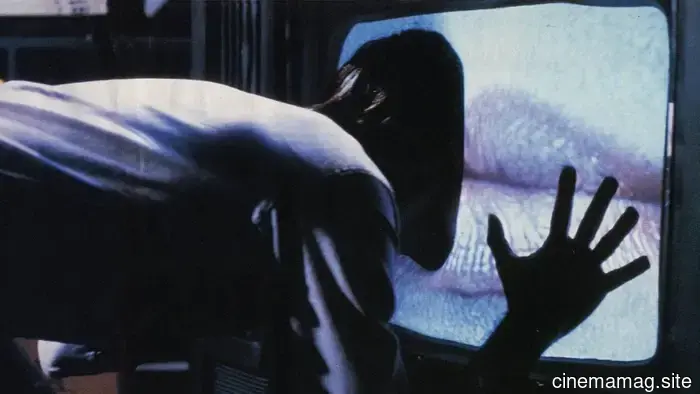
Instead of fleeing upon discovering Videodrome—a signal that induces hallucinations and tumors—Max leans in, which serves as the movie’s savage irony. The very force destroying him is also the most intriguing event of his life. Sound familiar? We’ve been doing this since around 2007.
Cronenberg’s brilliance lies in his refusal to moralize. Max isn’t punished for his cravings or corruption; instead, he is transformed by them. The film’s horror arises not from wicked individuals abusing bad technology, but from the merging of technology and humanity into indistinguishable entities. The television breathes as the videotape becomes flesh, and Max’s hand morphs into a gun. McLuhan’s assertion that the medium is the message is expanded by Cronenberg, stating that the medium is the body—the very essence of self.
Currently, ongoing discussions revolve around whether algorithms alter us. We consume studies regarding attention spans and dopamine feedback loops, and read think pieces on being perpetually connected. However, we often hesitate to connect those ideas to their implications: that the self engaged in this debate has already been influenced by the same entities it scrutinizes. We aren't neutral observers of our transformation; like Max Renn, we are embroiled in the process, with hands deep within, merely labelling it "research."
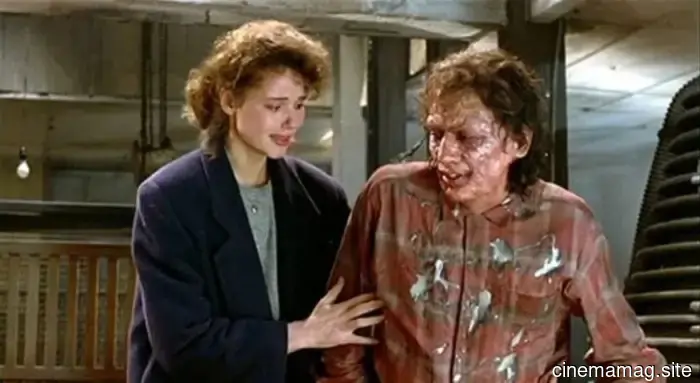
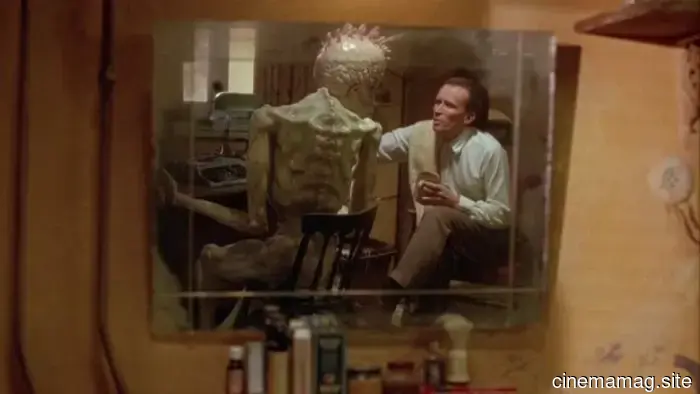
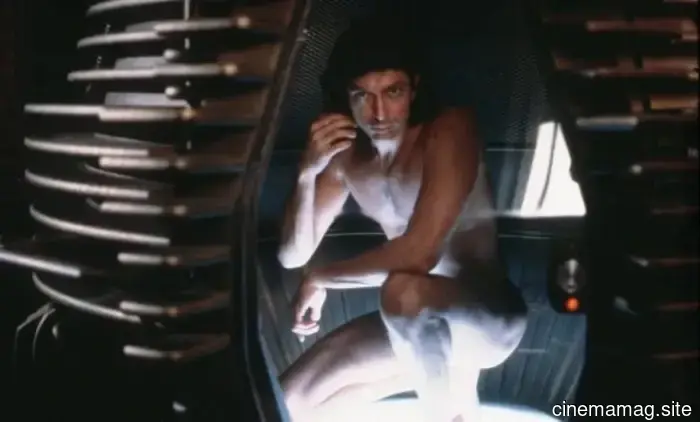
In The Fly (1986), Seth Brundle, a genius inventor, creates a functioning teleportation device. At this film’s outset, he embodies optimism, warmth, humor, and a hint of awkwardness that brilliant individuals exhibit after prolonged isolation with their inventions. He believes in progress and views the body as a problem to be solved. He enters the telepod.
What follows is arguably Cronenberg’s most formally accomplished film. Jeff Goldblum’s portrayal—showing Seth’s evolving stages from joy to strength to an increasingly insect-like state—stands as one of the decade’s greatest performances. The film’s effectiveness lies not merely in its horror,
Other articles
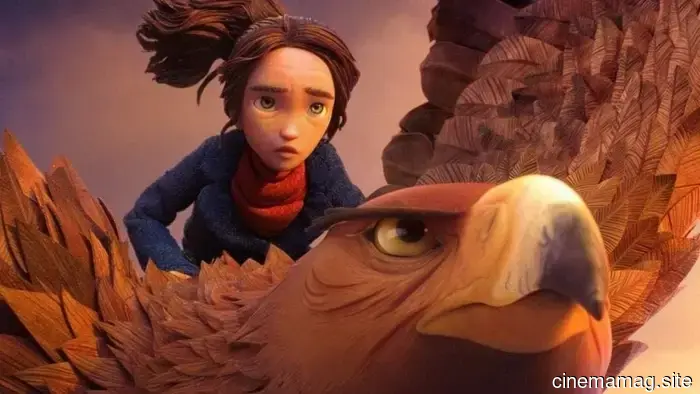 Laika's Wildwood releases its initial trailer.
Laika Studios has released the first teaser trailer for Wildwood, the forthcoming adaptation by director Travis Knight of the bestselling children’s book by writer Colin Meloy and illustrator Carson Ellis.
Laika's Wildwood releases its initial trailer.
Laika Studios has released the first teaser trailer for Wildwood, the forthcoming adaptation by director Travis Knight of the bestselling children’s book by writer Colin Meloy and illustrator Carson Ellis.
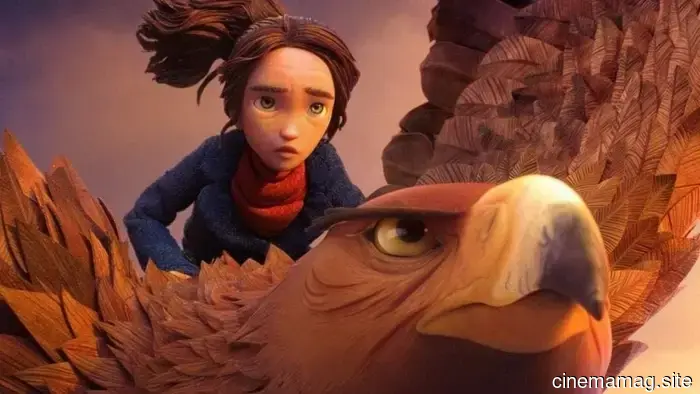 Laika's Wildwood reveals its initial trailer.
Laika Studios has released the initial teaser trailer for Wildwood, the forthcoming adaptation by director Travis Knight of the bestselling children’s work by writer Colin Meloy and illustrator Carson Ellis.
Laika's Wildwood reveals its initial trailer.
Laika Studios has released the initial teaser trailer for Wildwood, the forthcoming adaptation by director Travis Knight of the bestselling children’s work by writer Colin Meloy and illustrator Carson Ellis.
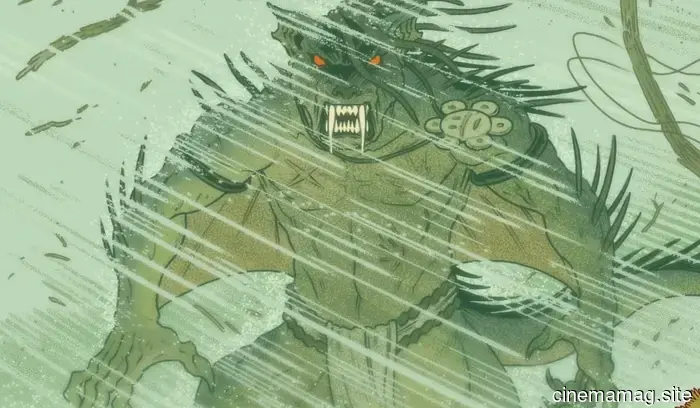 Exclusive Interview – Julio Anta, writer of Beast of Borikén, and artist Daniel Irizarri
Rachel Bellwoar talks with Julio Anta and Daniel Irizarri regarding their forthcoming comic book series, Beast of Borikén. Loli is not the only one frustrated by the developers' plans to construct a resort in…
Exclusive Interview – Julio Anta, writer of Beast of Borikén, and artist Daniel Irizarri
Rachel Bellwoar talks with Julio Anta and Daniel Irizarri regarding their forthcoming comic book series, Beast of Borikén. Loli is not the only one frustrated by the developers' plans to construct a resort in…
 Kate Beckinsale is set to star in George A. Romero's Twilight of the Dead.
Kate Beckinsale has battled her fair share of movie monsters over the years, but she is now set to take on zombies in George A. Romero’s long-awaited Twilight of the Dead. According to Deadline…
Kate Beckinsale is set to star in George A. Romero's Twilight of the Dead.
Kate Beckinsale has battled her fair share of movie monsters over the years, but she is now set to take on zombies in George A. Romero’s long-awaited Twilight of the Dead. According to Deadline…
 Cannes Review: Asghar Farhadi’s Parallel Tales Offers an Ambitious Yet Tedious Interpretation of Kieślowski
After twenty years of filmmaking, Iranian Oscar laureate Asghar Farhadi has made it very clear: he exists in the grey area, and we ought to as well. Parallel Tales, Farhadi’s tenth film (and his second in French), combines elements of Rear Window, Stranger Than Fiction, and Peeping Tom (with a hint of The Godfather) without
Cannes Review: Asghar Farhadi’s Parallel Tales Offers an Ambitious Yet Tedious Interpretation of Kieślowski
After twenty years of filmmaking, Iranian Oscar laureate Asghar Farhadi has made it very clear: he exists in the grey area, and we ought to as well. Parallel Tales, Farhadi’s tenth film (and his second in French), combines elements of Rear Window, Stranger Than Fiction, and Peeping Tom (with a hint of The Godfather) without
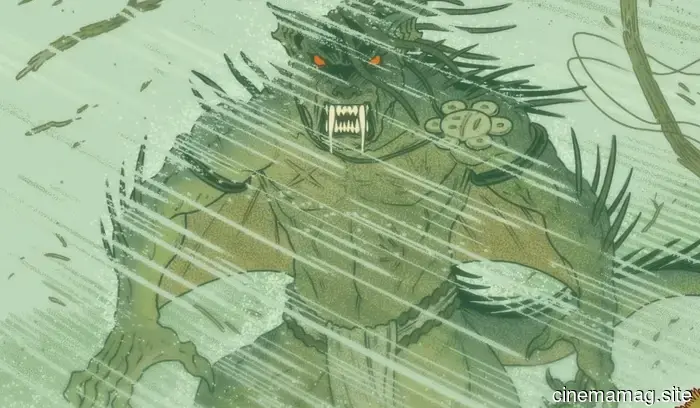 Exclusive Interview – Julio Anta, the writer of Beast of Borikén, and artist Daniel Irizarri.
Rachel Bellwoar speaks with Julio Anta and Daniel Irizarri regarding their forthcoming comic book series, Beast of Borikén. Loli is not the only one frustrated that developers are aiming to construct a resort in...
Exclusive Interview – Julio Anta, the writer of Beast of Borikén, and artist Daniel Irizarri.
Rachel Bellwoar speaks with Julio Anta and Daniel Irizarri regarding their forthcoming comic book series, Beast of Borikén. Loli is not the only one frustrated that developers are aiming to construct a resort in...
Peak Paranoia: The Timeliness of David Cronenberg's 1980s Body Horror Films
Adam Page discusses the relevance of David Cronenberg’s body horror films from the 1980s. A notable moment in Videodrome (1983) features James Woods as he reaches into his own abdomen. Not thr...