
Cannes Review: Gentle Monster Is a Skillfully Executed Drama Following Betrayal
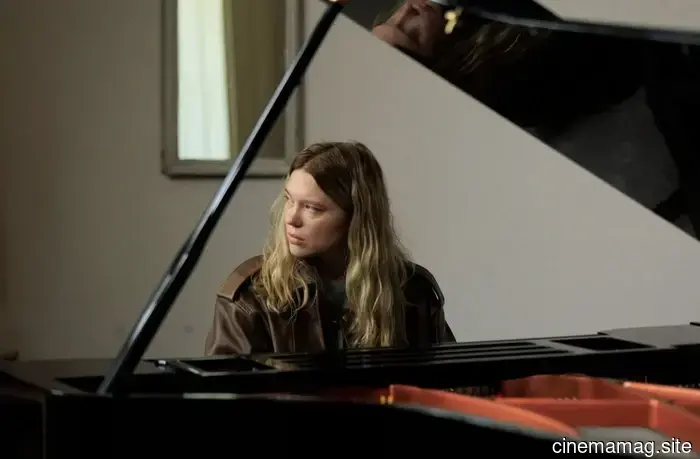
“Look into my eyes / can you see they’re open wide / would I lie to you?” These lyrics hang in the air as a gentle whisper for just a moment before the piano notes that accompany them carry them away and into the start of Gentle Monster, the latest work from Corsage director Marie Kreutzer. One might assume that the cover of such a well-known ’90s pop song, reverberating under the fingertips of the film's main character, Lucy (Léa Seydoux), serves as some form of exposition. However, the growl hidden in Seydoux’s smooth voice could also indicate her exhaustion—the Lucy we encounter in this initial scene is still transitioning to a peaceful, rural life after a career spent touring European cities. When her husband Philip (Laurence Rupp) interrupts her practice by rushing in, overwhelmed with anxiety, it's the calm in her comforting voice that suggests it's not the first time she has paused mid-song for him.
Nestled in the hills of Austria, a large house with an expansive garden offers Lucy, Philip, and their young son Johnny (Malo Blanchet) a fresh start. The boxes, bare walls, and the slow unpacking of their life are all apparent. Kreutzer’s script reveals very little overtly: passing mentions of Philip’s burnout as the reason for their move are contrasted by the happiness he shows while filming their new life with a Super-8 camera. The flickering scenes of domestic happiness serve as the only real acknowledgment of his career in filmmaking—apart from a poster of Bergman’s Persona leaning against the wall—creating a gesture that feels somewhat dismissive. Rather than seizing the chance to craft a meta-narrative around an artistic couple facing mysterious decline, Kreutzer opts not to define Philip or his profession. Simultaneously, we get glimpses of Lucy’s own career as an avant-garde concert pianist who exclusively performs songs by male artists before captivated audiences.
While Gentle Monster presents a female perspective through greater access to Lucy’s psychology, in the second act, Kreutzer alters this viewpoint by introducing a previously secondary character: police officer Elsa Kühn (Jella Haase), who presents a search warrant at the story's outset. Once the narrative shifts to Elsa’s life outside work, we encounter a fiercely independent woman with an aging, ailing father who often behaves inappropriately with his live-in nurse, and Haase’s performance is as stoic as one would expect from a lead in a police drama. Filmed by cinematographer Judith Kaufmann (The Teacher’s Lounge, Corsage), the movie features sharp, revealing static, wide-shot scenes, balanced by an intimate score from French artist Camille.
Gentle Monster signifies the Austrian filmmaker’s return to the psychological drama/thriller terrain first explored in 2019’s The Ground Beneath My Feet, but the latter would not exist without the genre-blending Corsage. In fact, a series of events following the completion of her historical film inspired Kreutzer’s new script. Revealing more would expose too much about the plot, but for those familiar with a particular scandal that rocked the Austrian film industry in 2023, the early twist in Gentle Monster—which relates to Philip’s character—wouldn't be shocking. Rupp, mainly known for his television roles and the upcoming absurdist comedy Veni Vidi Vici, shoulders the burden of portraying a tortured man whose desperation and resentment are masked by love. His face remains inscrutable and hard to interpret as his relationship with Lucy becomes strained and eventually breaks, while no amount of apologies can erase the scent of secrets he carries in every scene.
On the other hand, Léa Seydoux seems to bear the emotional weight of the film like a crown—her confidence as Lucy is not self-serving but rather reflects a genuine belief that perhaps things aren’t so bleak after all. Even though the storyline revolves around quiet melodrama addressing the harm inflicted on women by men, both Seydoux and Haase portray a relatable facade to protect the men who hurt them, all while simmering with internal rage. Despite its controlled approach, Gentle Monster is a harsh film—not so much towards its viewers but towards its titular character—a treatment that some may view as exaggerated, yet there exists a sensitivity that guides Kreutzer’s script away from themes of revenge, humiliation, or severe punishment. Considering its taboo subject matter, this speaks volumes.
Gentle Monster debuted at the 2026 Cannes Film Festival.
Other articles
 Peak Paranoia: The Timeliness of David Cronenberg's 1980s Body Horror Films
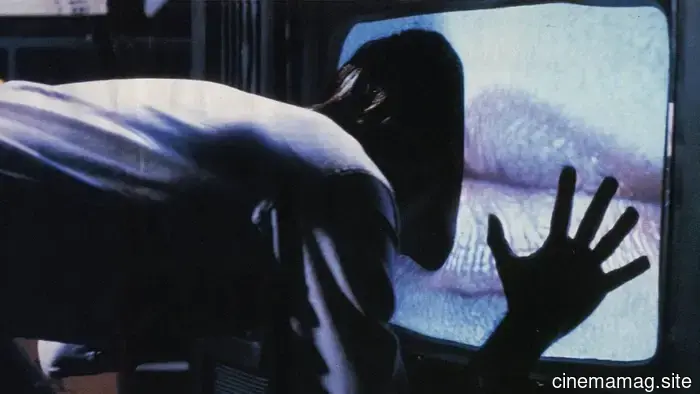
Adam Page discusses the relevance of David Cronenberg’s body horror films from the 1980s. A notable moment in Videodrome (1983) features James Woods as he reaches into his own abdomen. Not thr...
Peak Paranoia: The Timeliness of David Cronenberg's 1980s Body Horror Films
Adam Page discusses the relevance of David Cronenberg’s body horror films from the 1980s. A notable moment in Videodrome (1983) features James Woods as he reaches into his own abdomen. Not thr...
 The latest trailer for LEGO Batman: Legacy of the Dark Knight showcases the extras included in the Deluxe Edition.
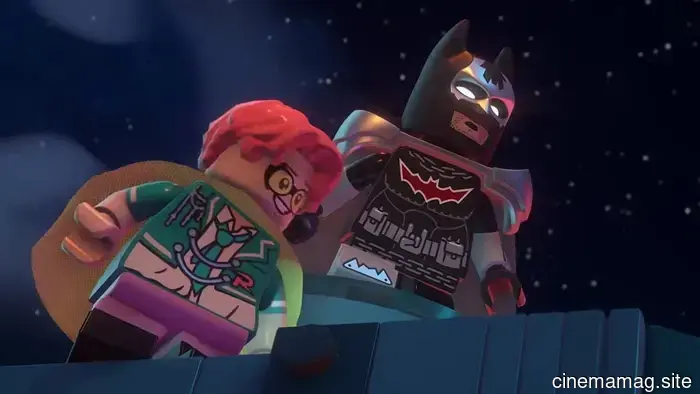
Warner Bros. Games has unveiled a new trailer (see below) that highlights all the bonus features available in the Deluxe Edition of LEGO Batman: Legacy of the Dark Knight. There's a wealth of extra content to explore…
The latest trailer for LEGO Batman: Legacy of the Dark Knight showcases the extras included in the Deluxe Edition.
Warner Bros. Games has unveiled a new trailer (see below) that highlights all the bonus features available in the Deluxe Edition of LEGO Batman: Legacy of the Dark Knight. There's a wealth of extra content to explore…
 Exclusive Interview – Julio Anta, the writer of Beast of Borikén, and artist Daniel Irizarri.
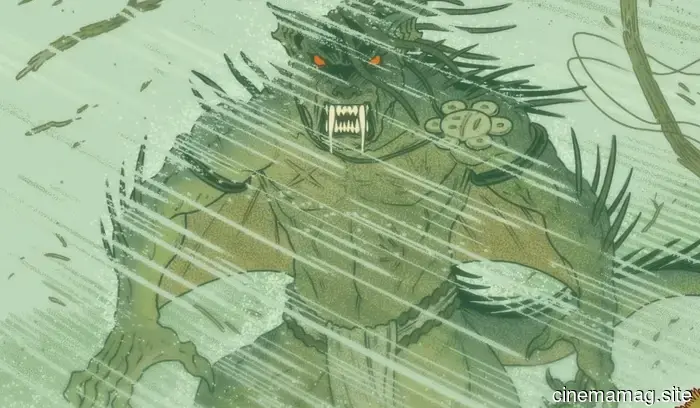
Rachel Bellwoar speaks with Julio Anta and Daniel Irizarri regarding their forthcoming comic book series, Beast of Borikén. Loli is not the only one frustrated that developers are aiming to construct a resort in...
Exclusive Interview – Julio Anta, the writer of Beast of Borikén, and artist Daniel Irizarri.
Rachel Bellwoar speaks with Julio Anta and Daniel Irizarri regarding their forthcoming comic book series, Beast of Borikén. Loli is not the only one frustrated that developers are aiming to construct a resort in...
 Laika's Wildwood reveals its initial trailer.
Laika Studios has released the initial teaser trailer for Wildwood, the forthcoming adaptation by director Travis Knight of the bestselling children’s work by writer Colin Meloy and illustrator Carson Ellis.
Laika's Wildwood reveals its initial trailer.
Laika Studios has released the initial teaser trailer for Wildwood, the forthcoming adaptation by director Travis Knight of the bestselling children’s work by writer Colin Meloy and illustrator Carson Ellis.
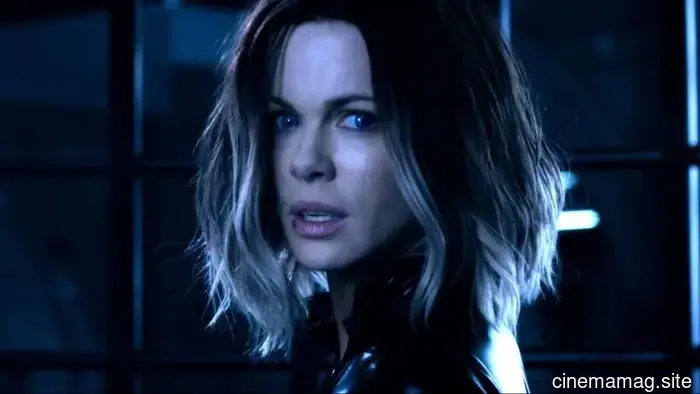 Kate Beckinsale is set to star in George A. Romero's Twilight of the Dead.
Kate Beckinsale has battled her fair share of movie monsters over the years, but she is now set to take on zombies in George A. Romero’s long-awaited Twilight of the Dead. According to Deadline…
Kate Beckinsale is set to star in George A. Romero's Twilight of the Dead.
Kate Beckinsale has battled her fair share of movie monsters over the years, but she is now set to take on zombies in George A. Romero’s long-awaited Twilight of the Dead. According to Deadline…
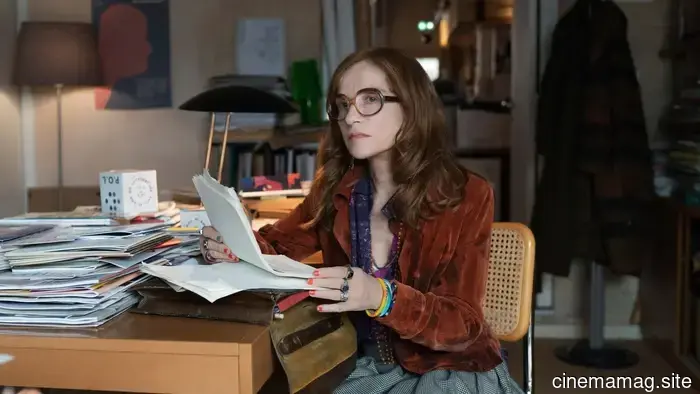 Cannes Review: Asghar Farhadi’s Parallel Tales Offers an Ambitious Yet Tedious Interpretation of Kieślowski
After twenty years of filmmaking, Iranian Oscar laureate Asghar Farhadi has made it very clear: he exists in the grey area, and we ought to as well. Parallel Tales, Farhadi’s tenth film (and his second in French), combines elements of Rear Window, Stranger Than Fiction, and Peeping Tom (with a hint of The Godfather) without
Cannes Review: Asghar Farhadi’s Parallel Tales Offers an Ambitious Yet Tedious Interpretation of Kieślowski
After twenty years of filmmaking, Iranian Oscar laureate Asghar Farhadi has made it very clear: he exists in the grey area, and we ought to as well. Parallel Tales, Farhadi’s tenth film (and his second in French), combines elements of Rear Window, Stranger Than Fiction, and Peeping Tom (with a hint of The Godfather) without
Cannes Review: Gentle Monster Is a Skillfully Executed Drama Following Betrayal
“Gaze into my eyes / can you notice they’re wide open / would I deceive you?” These lyrics hang momentarily in the air like a gentle whisper before the piano melodies gently usher them away, leading us into Gentle Monster, the newest work from Corsage director Marie Kreutzer. One could